Rockstar Tour Bus LLC

Fort Lauderdale, Florida

Luxury without compromise. Forty feet of leather, chrome, and satellite TV, with a driver who knows the way.

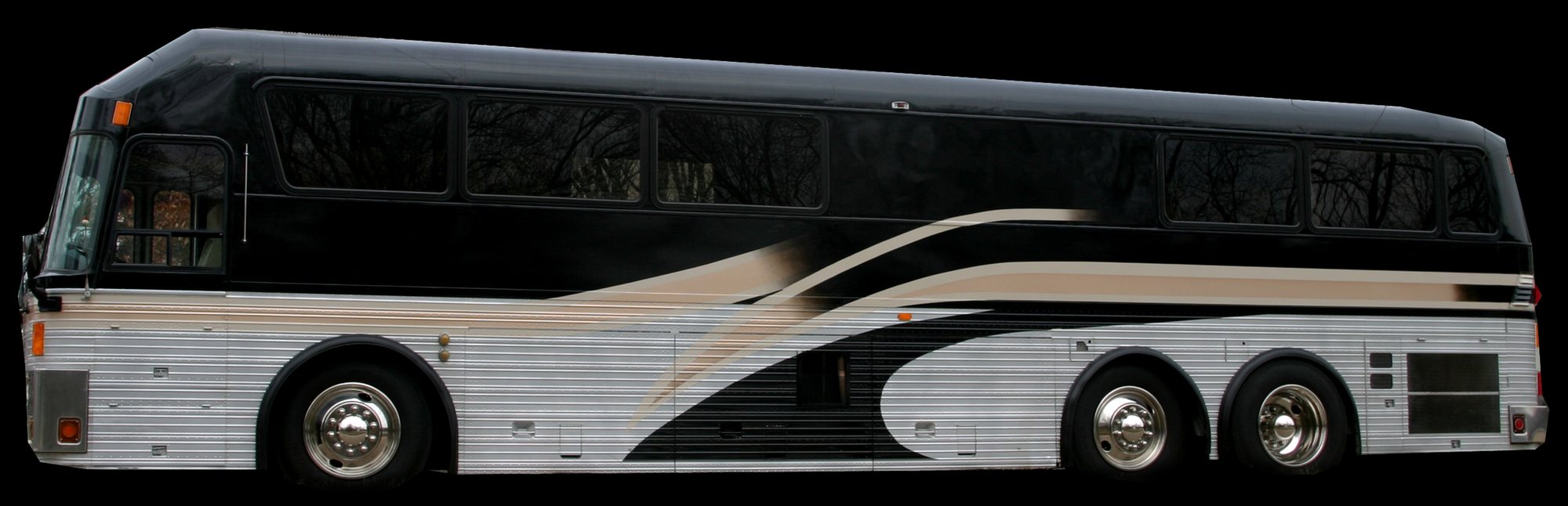
Side profile of the Rockstar Tour Bus, a silver coach with a black and gold stripe

Build Sheet

The Coach

“Luxury without compromise is Rockstar's reason for being, from the in-motion satellite and incredible sound system to the comfortable couches and a well appointed wet bar. We only operate full sized, 40 or 45 foot luxury tour coaches, no mini busses, party buses, or limos, only the best for a Rockstar.”

Chassis
EagleModel 10
Length
40Ft
Width
8Ft
Seats, in Style
28to35

Outside

Walkaround

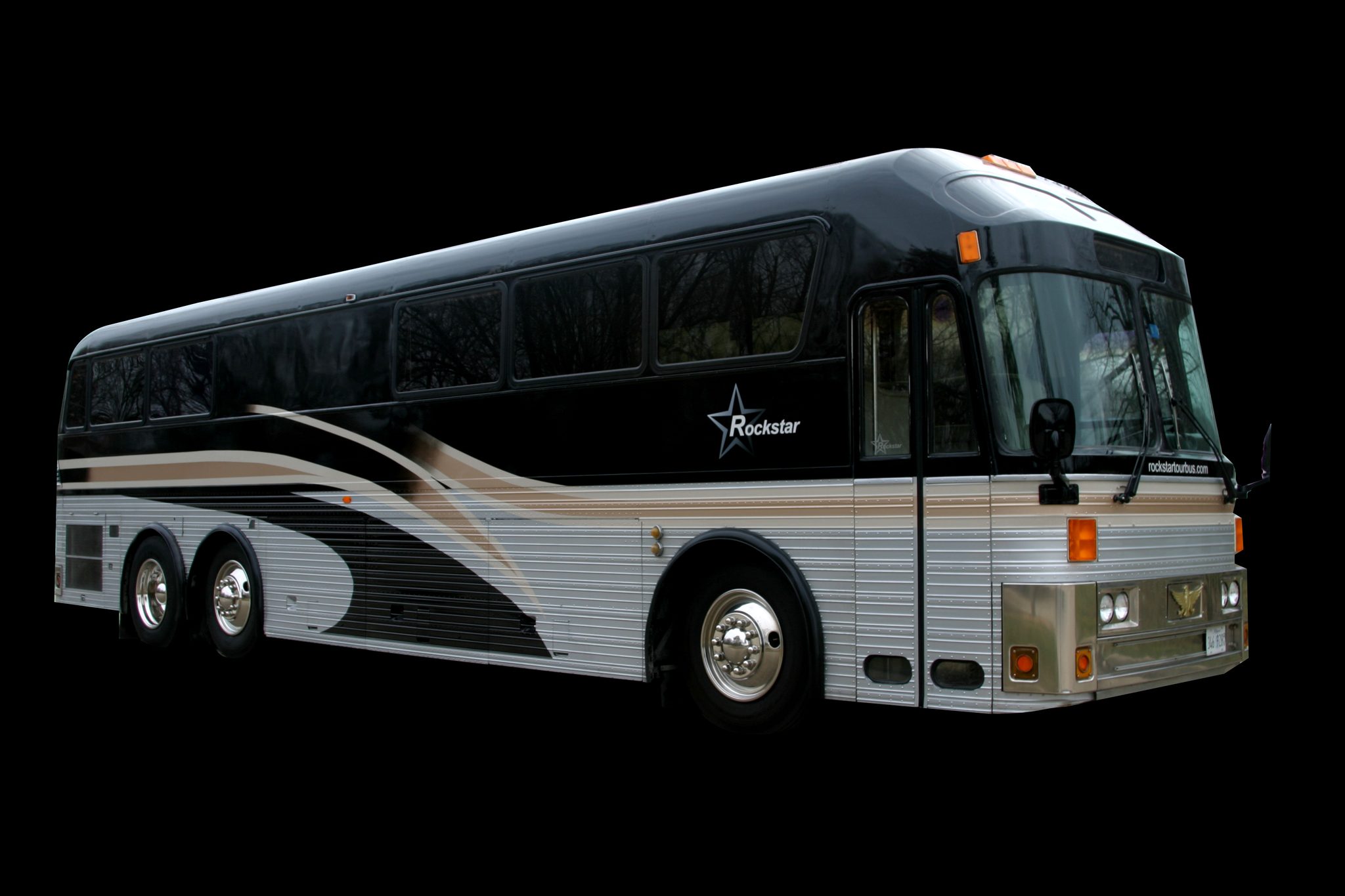
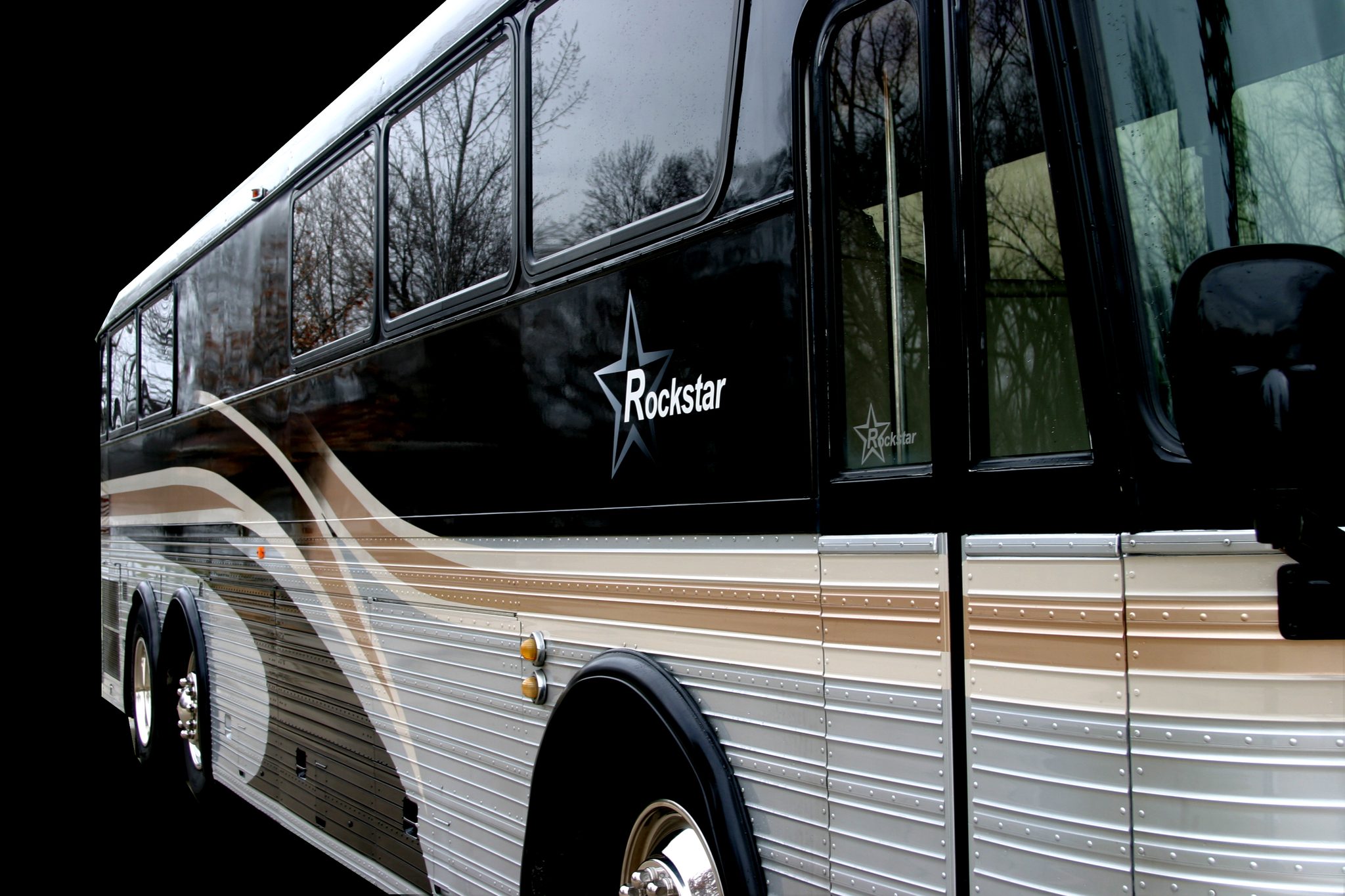
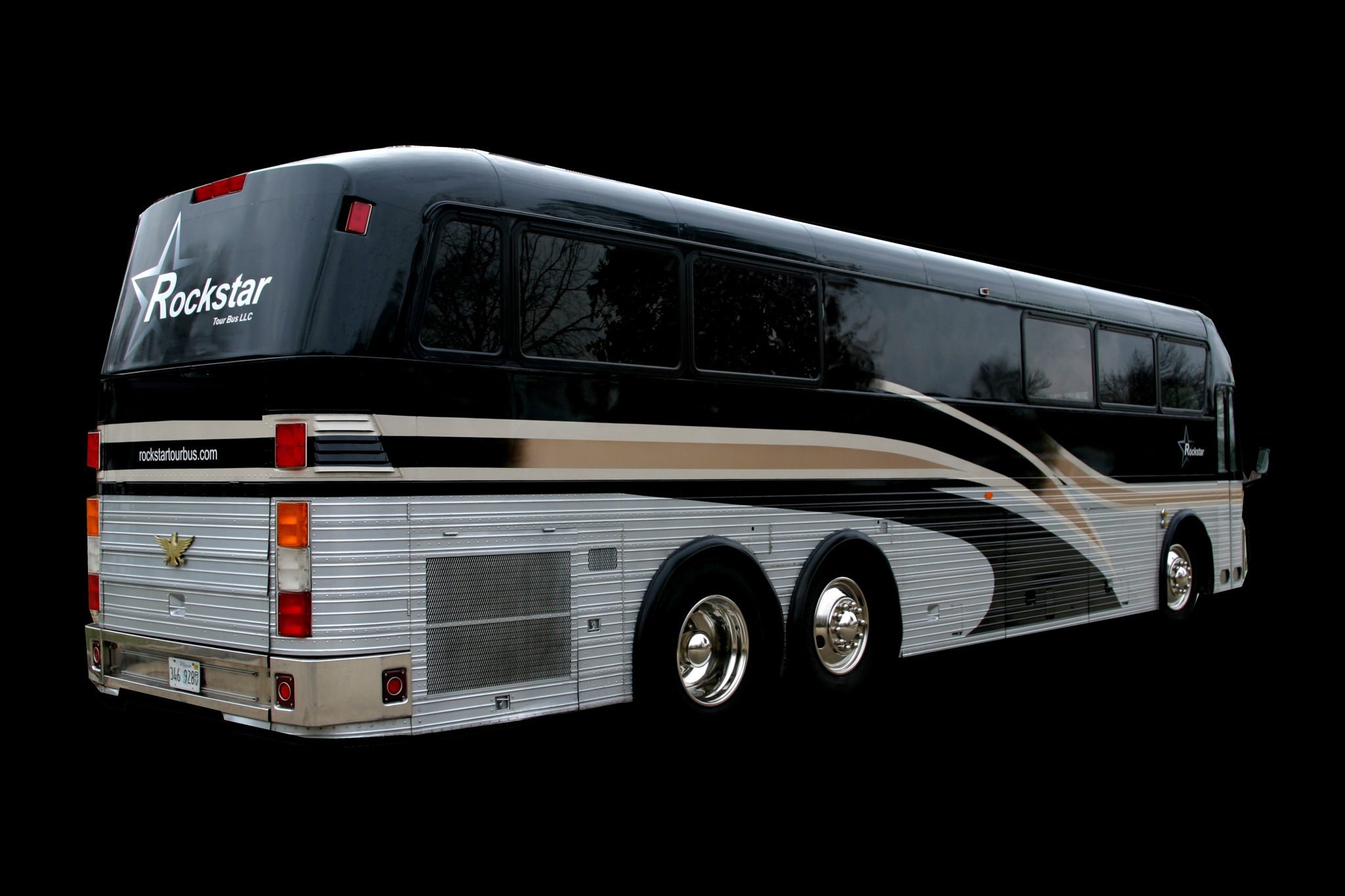
Black over chrome, gold stripe down the sill, star on every window.

Front three-quarter view of the coach
Front Three-Quarter
Side of the coach with the Rockstar star logo
Curb Side
Rear three-quarter view of the coach
Rear Three-Quarter
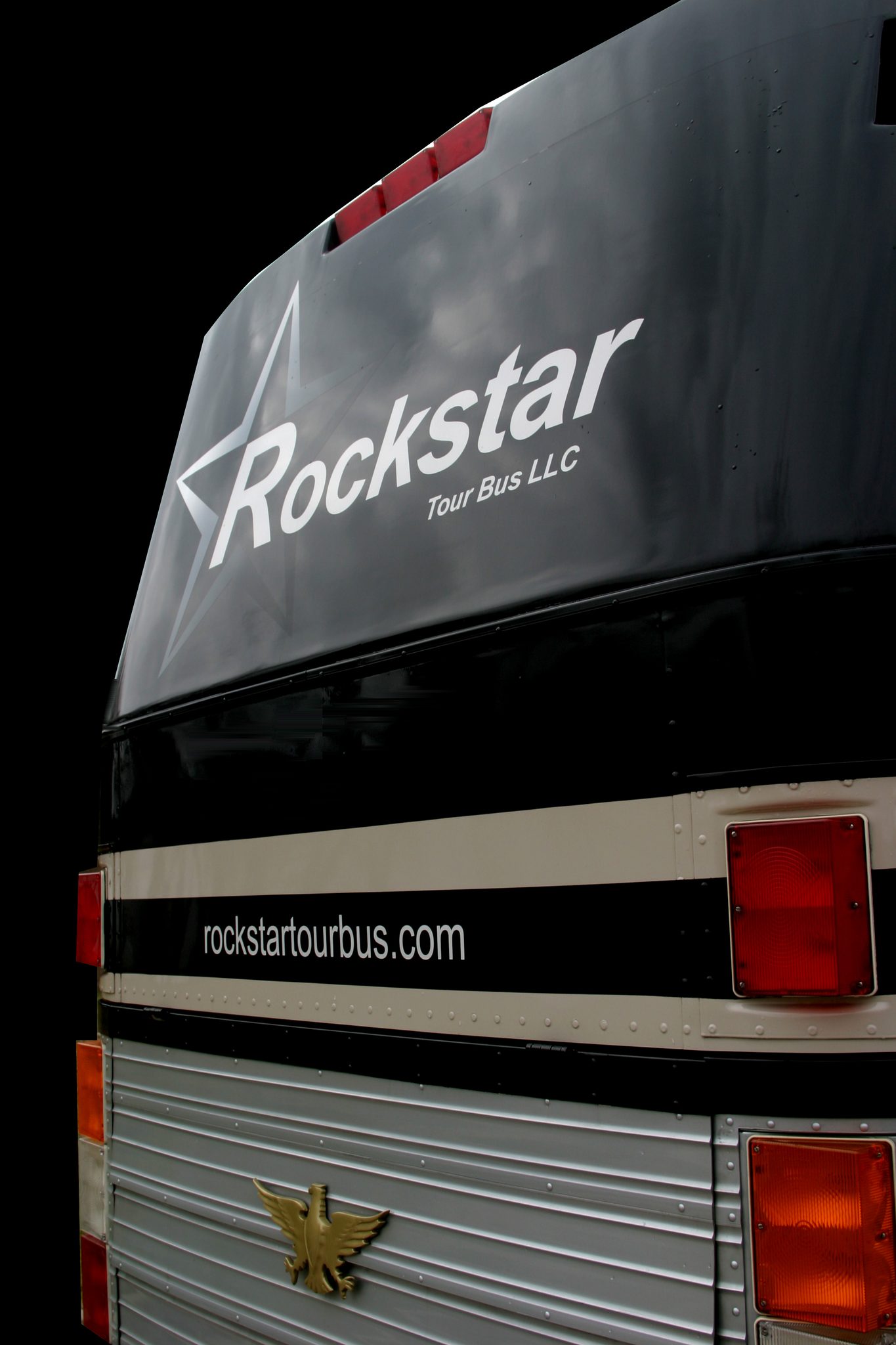
Rear corner decal with the Rockstar name
Rear Decal
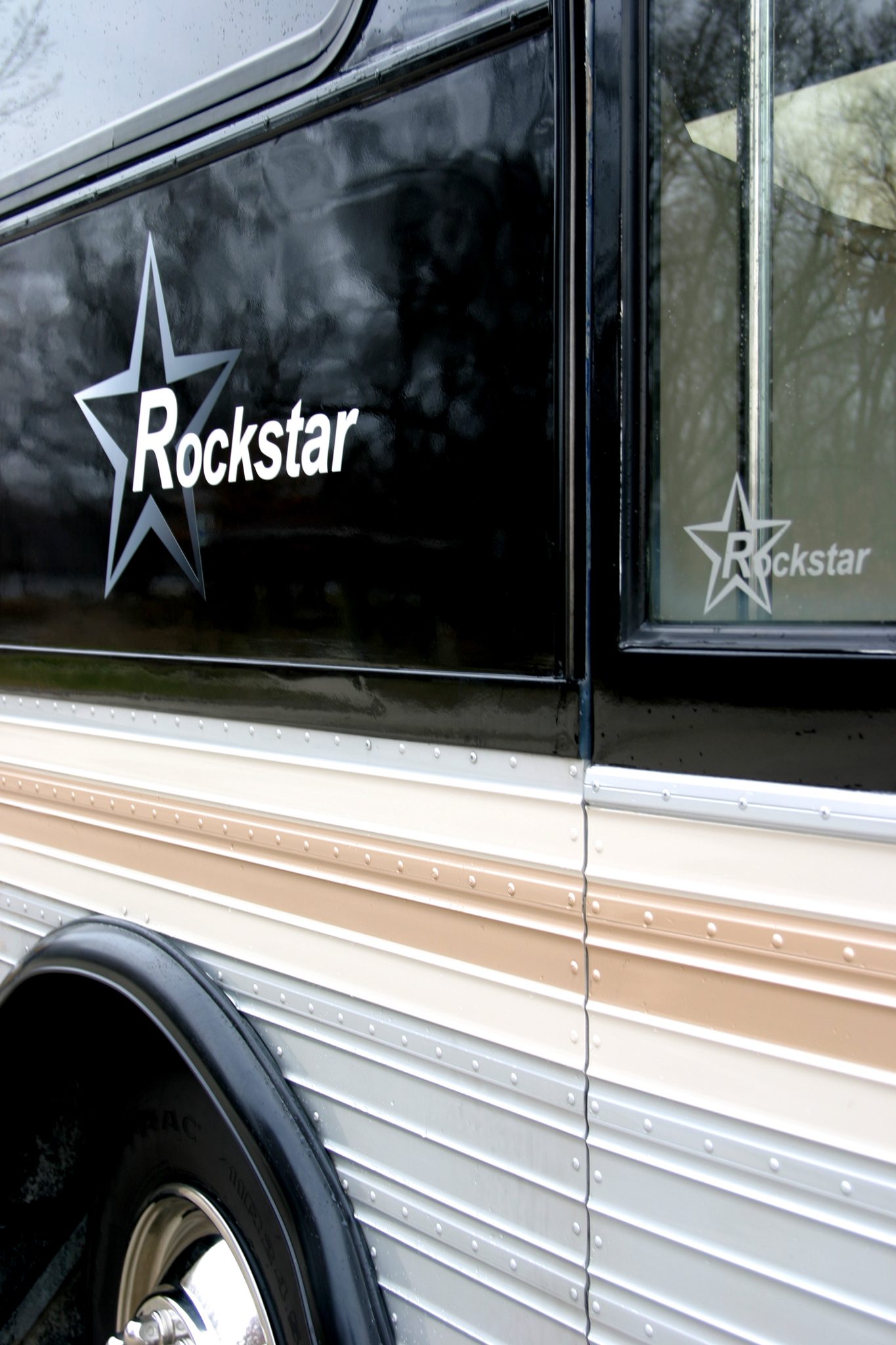
Star logo on a tinted window
Star on Glass
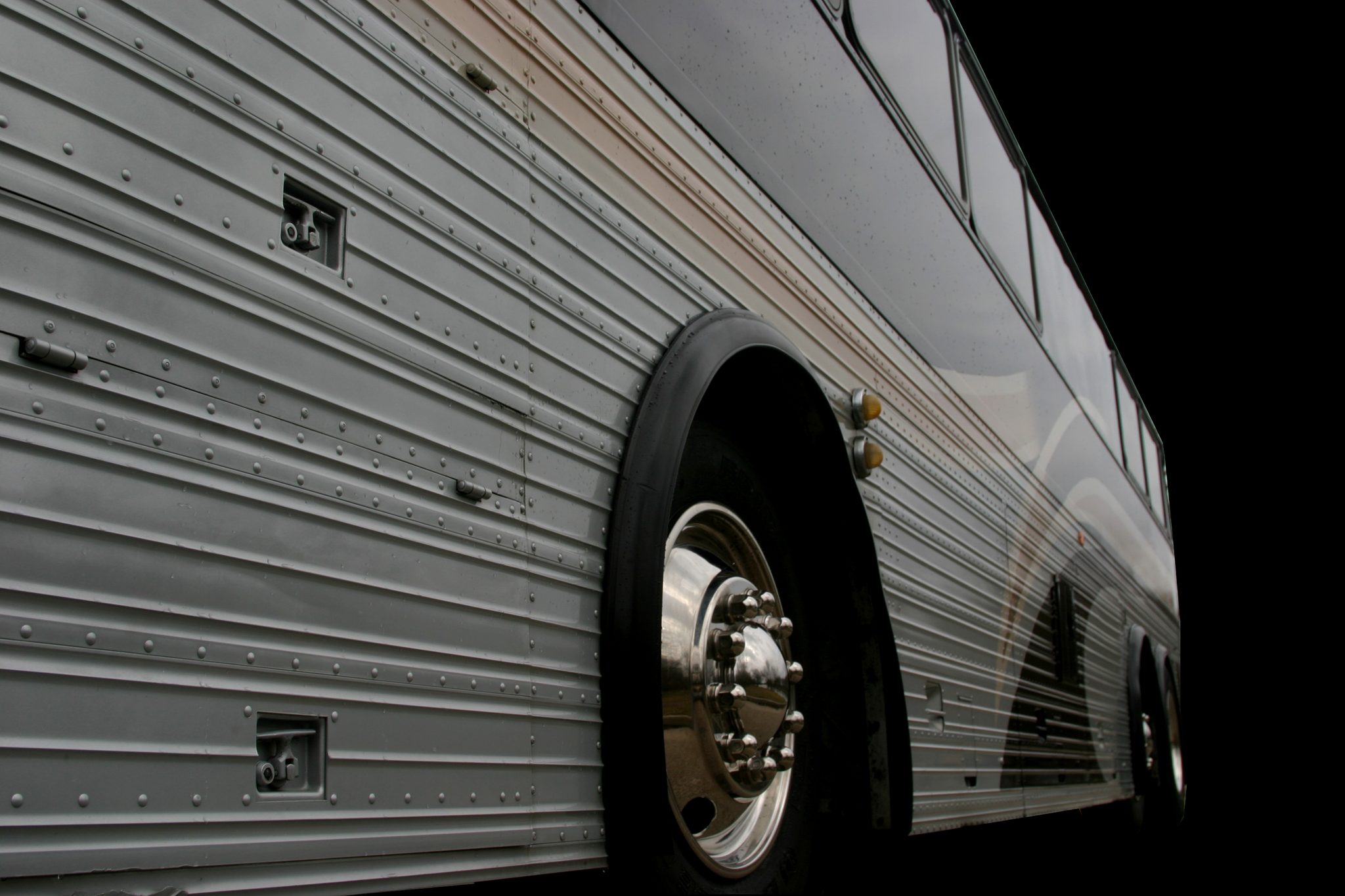
Polished wheels and the stripe along the lower body
Chrome and Stripe
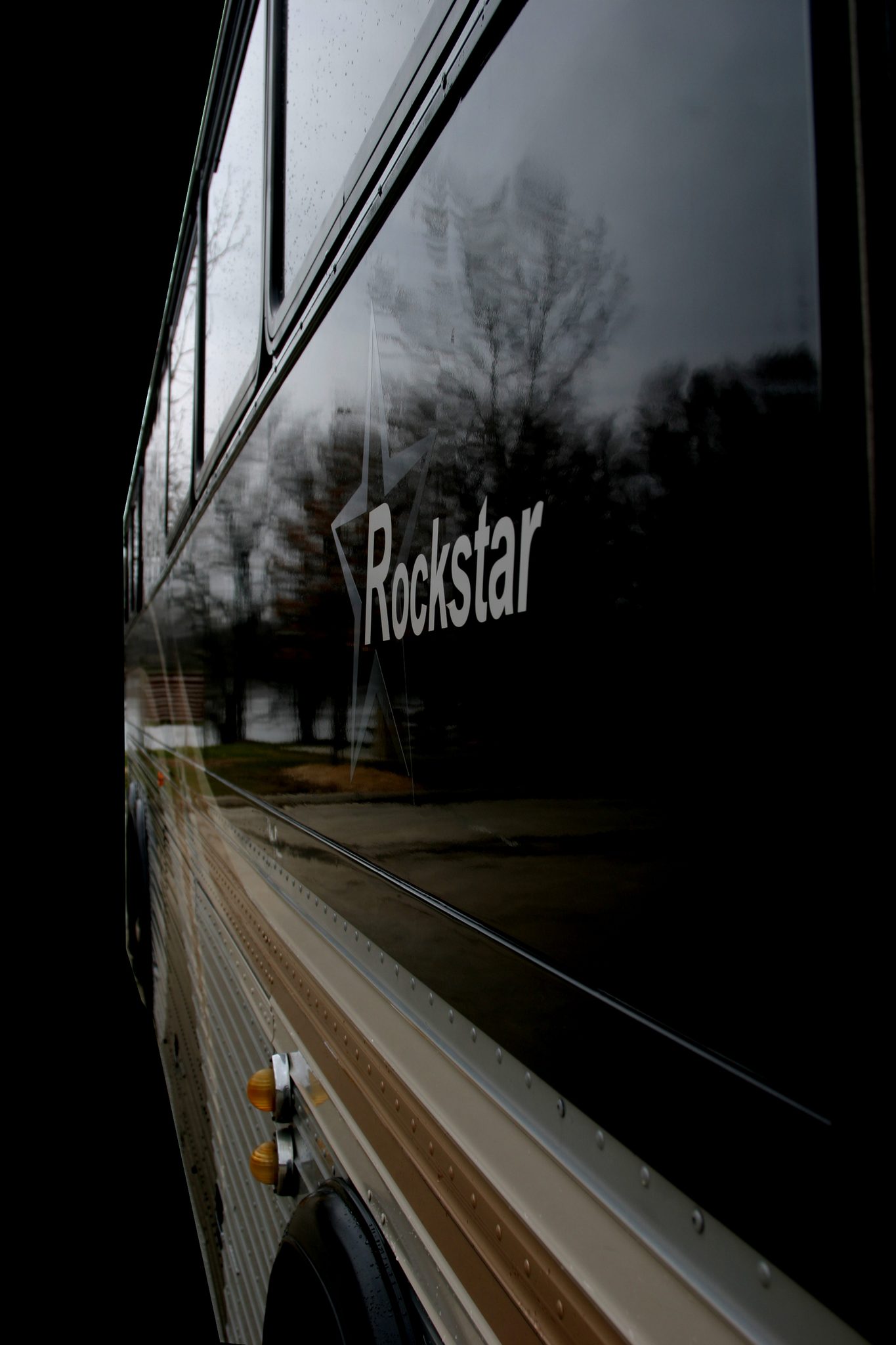
Reflection of the Rockstar logo in the coach's side
Reflection

Inside

Step Aboard

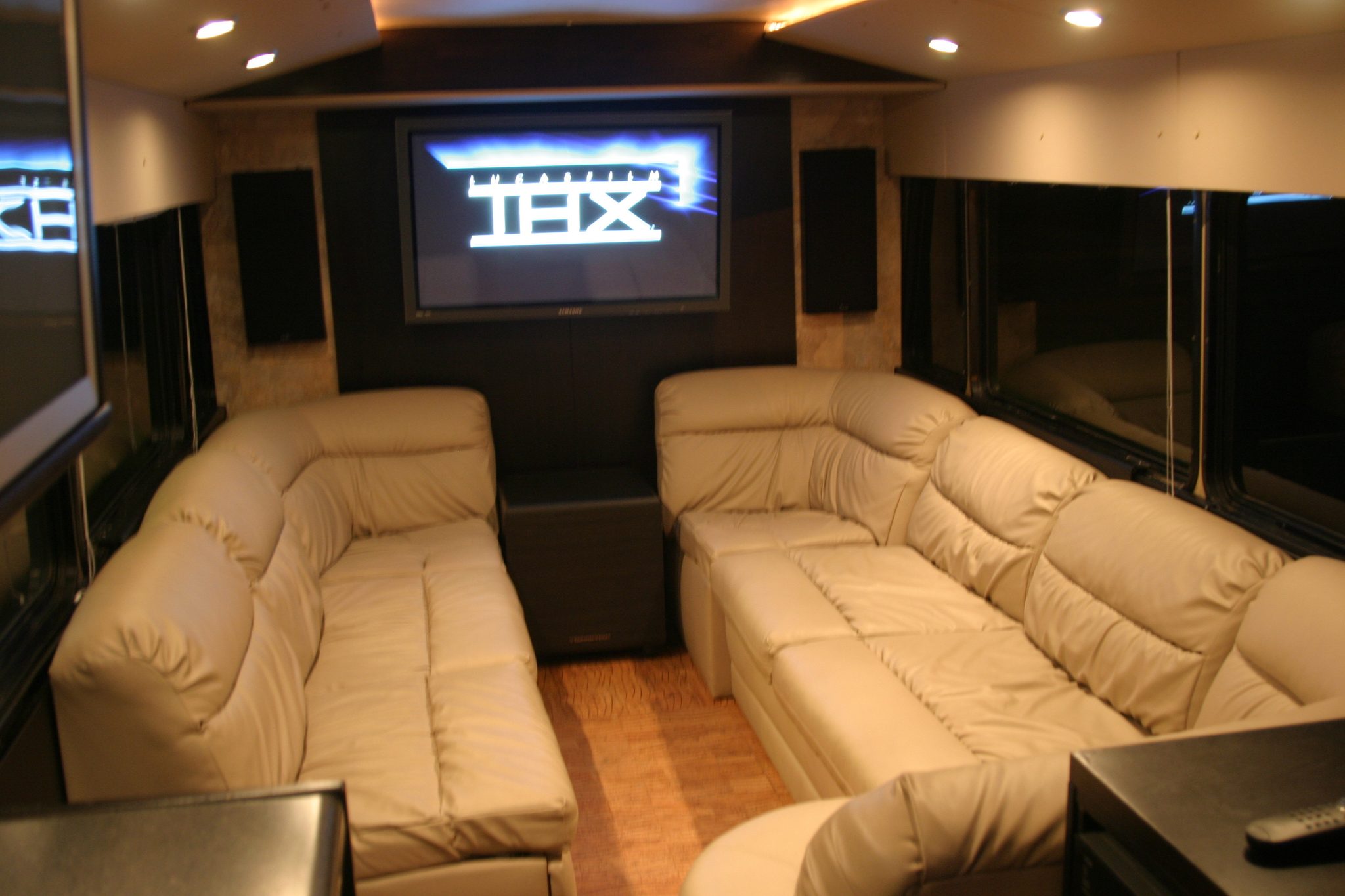
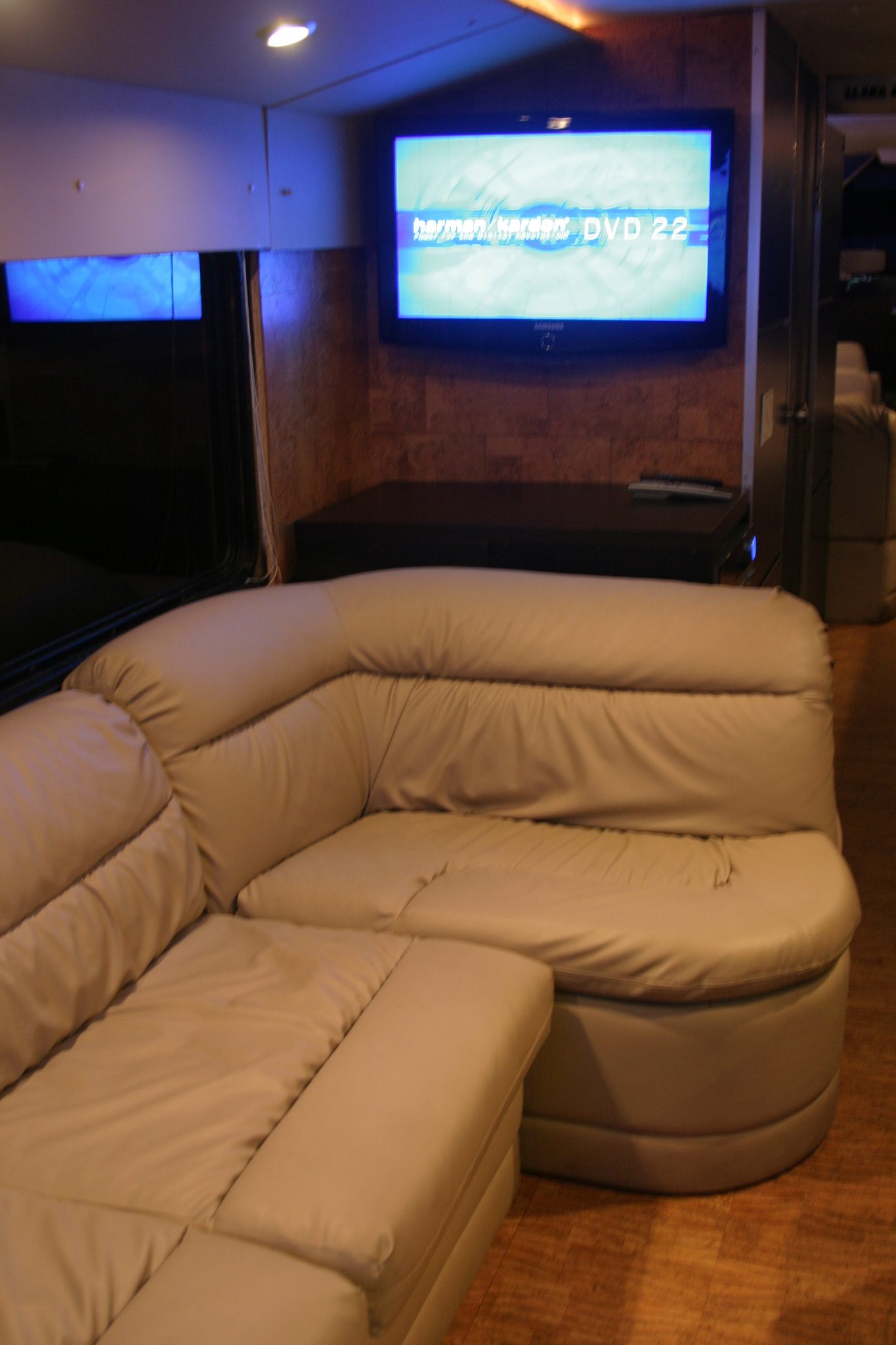
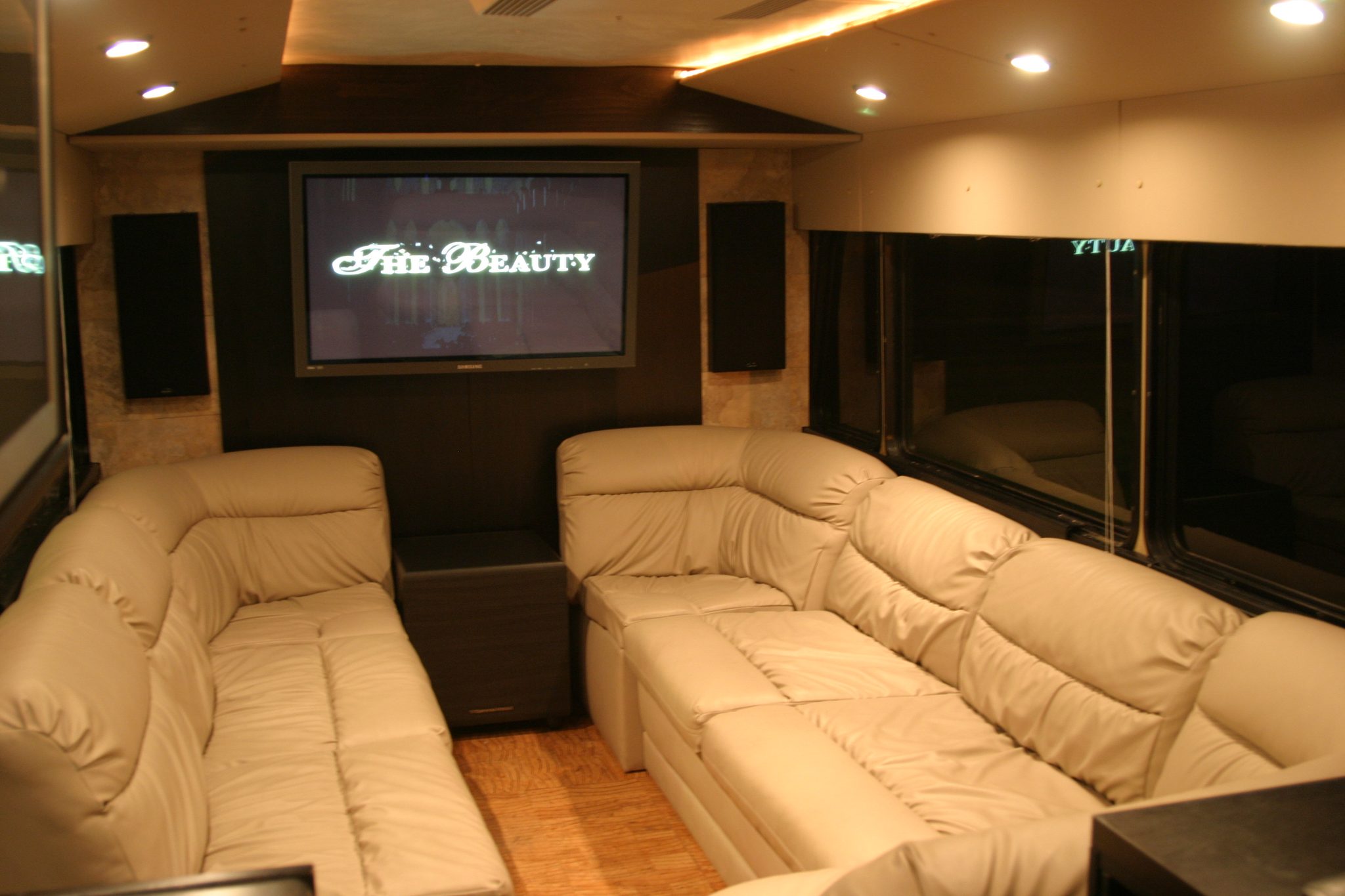
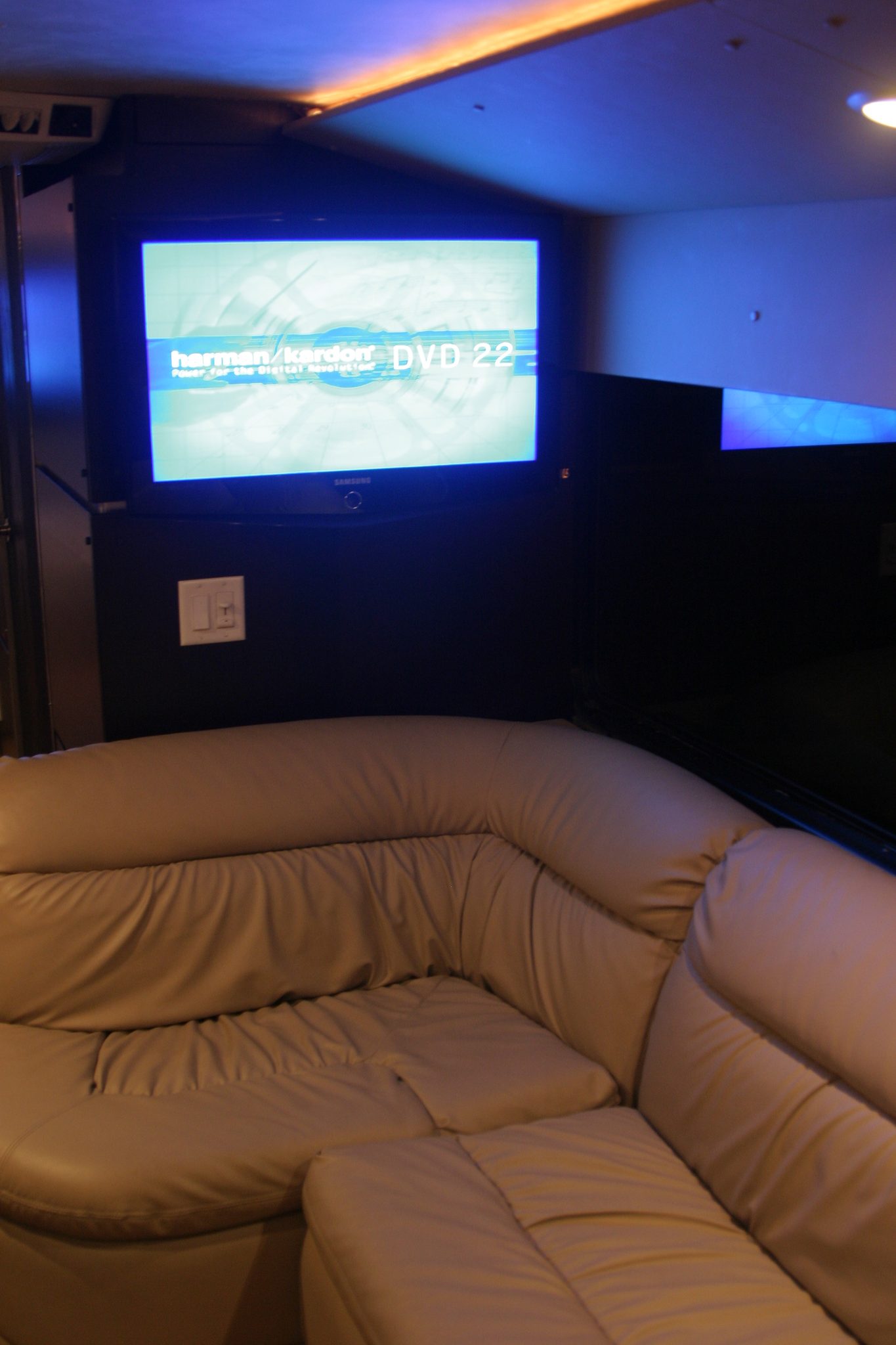
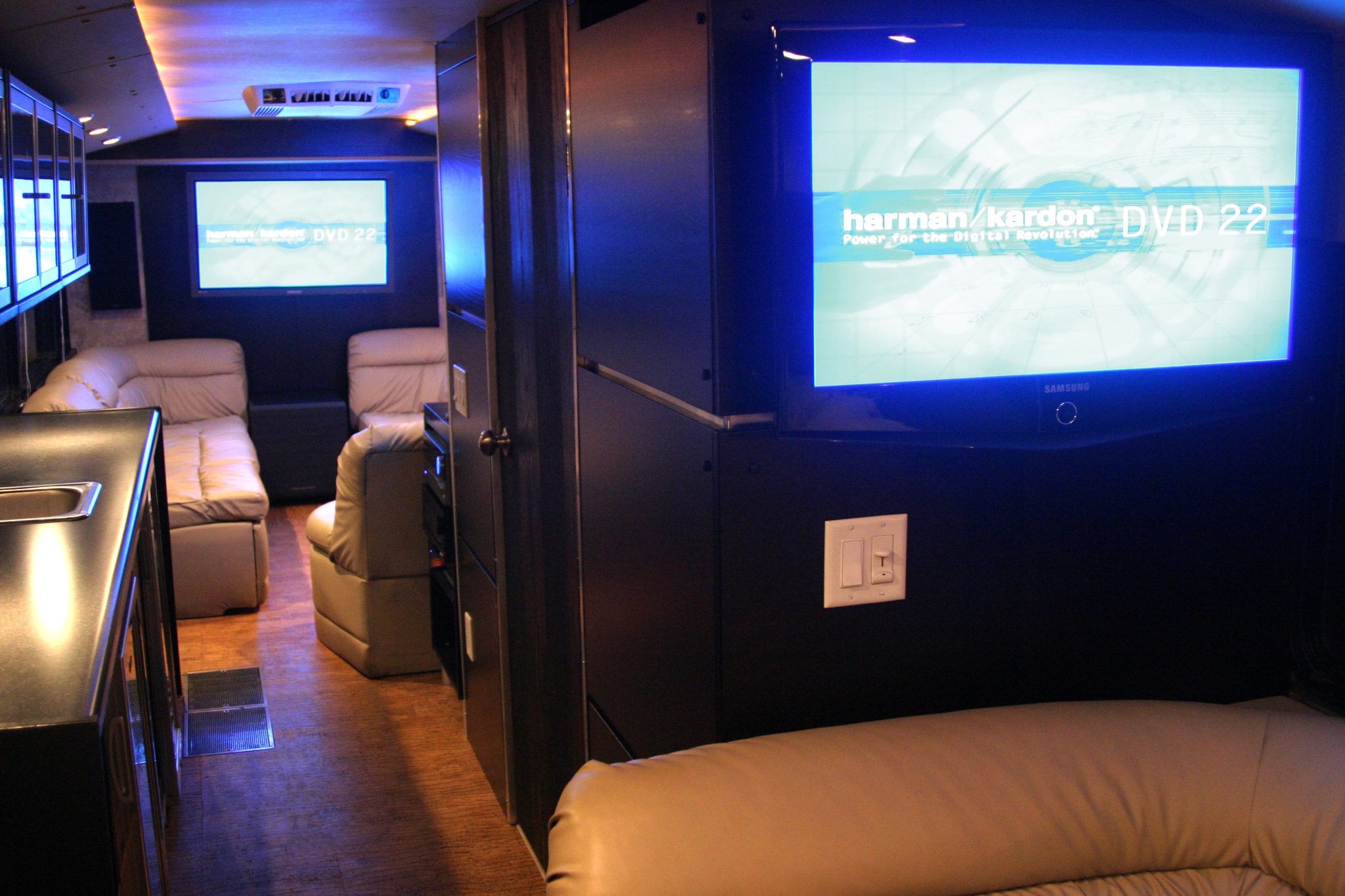
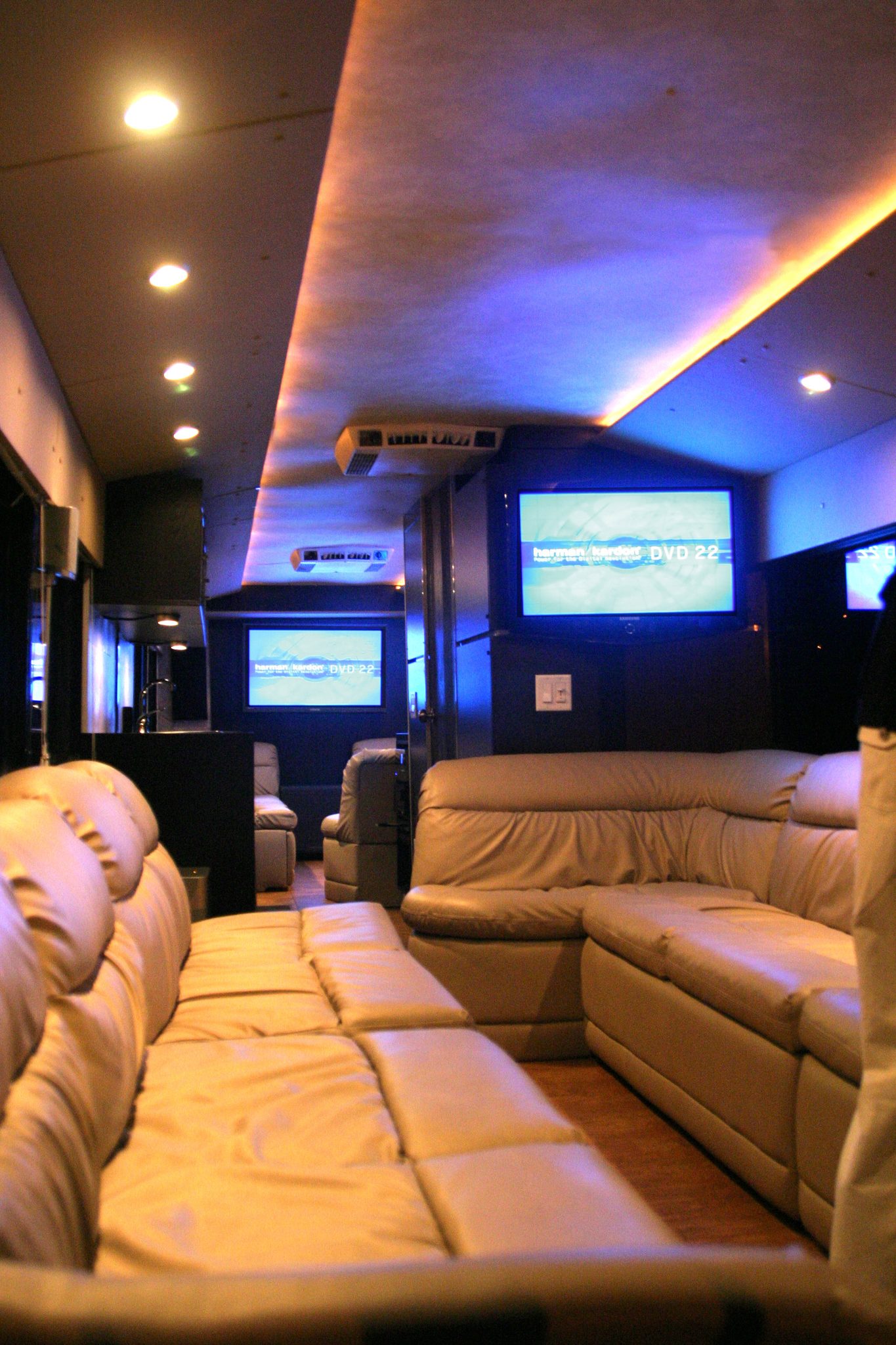
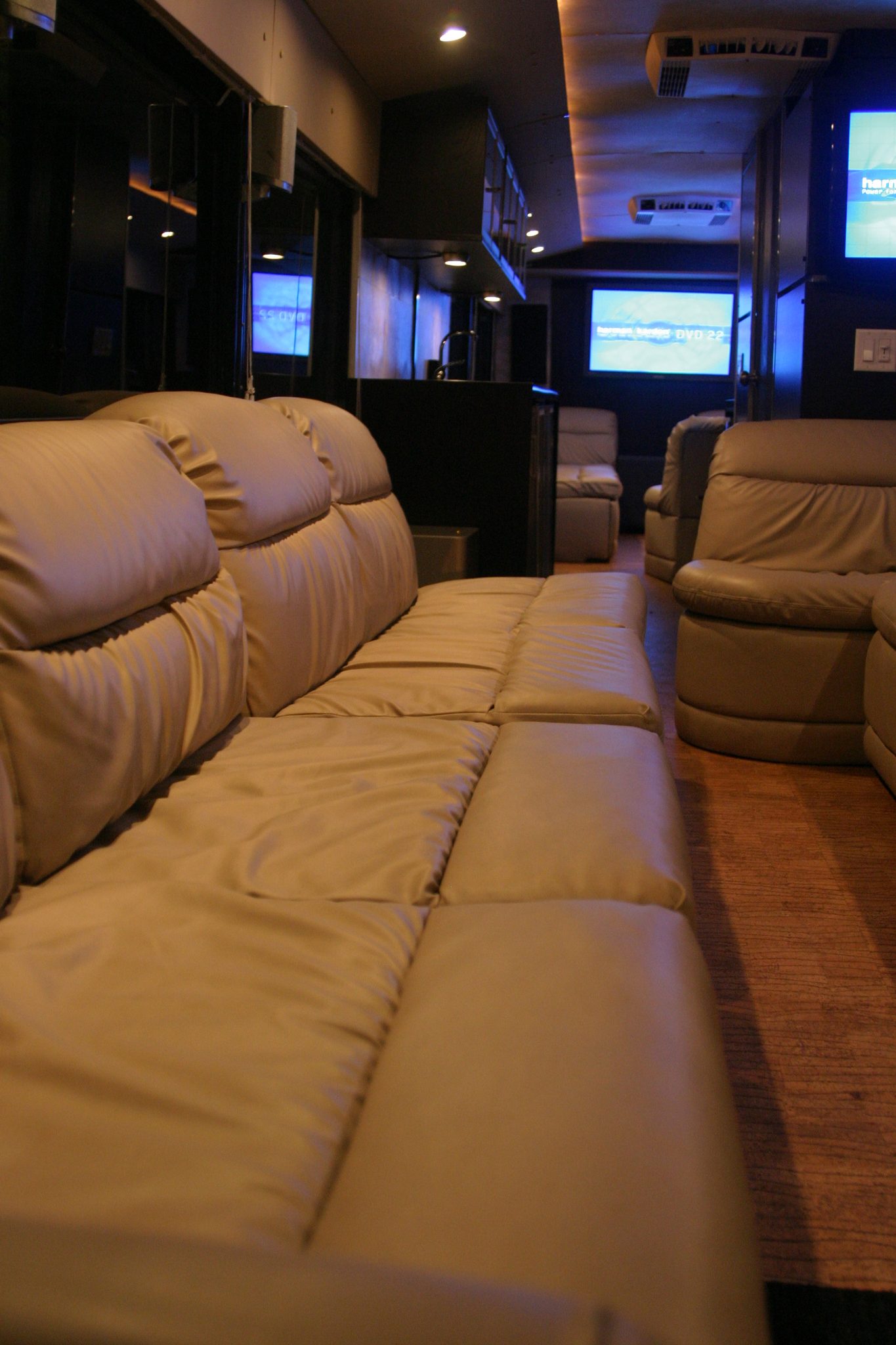
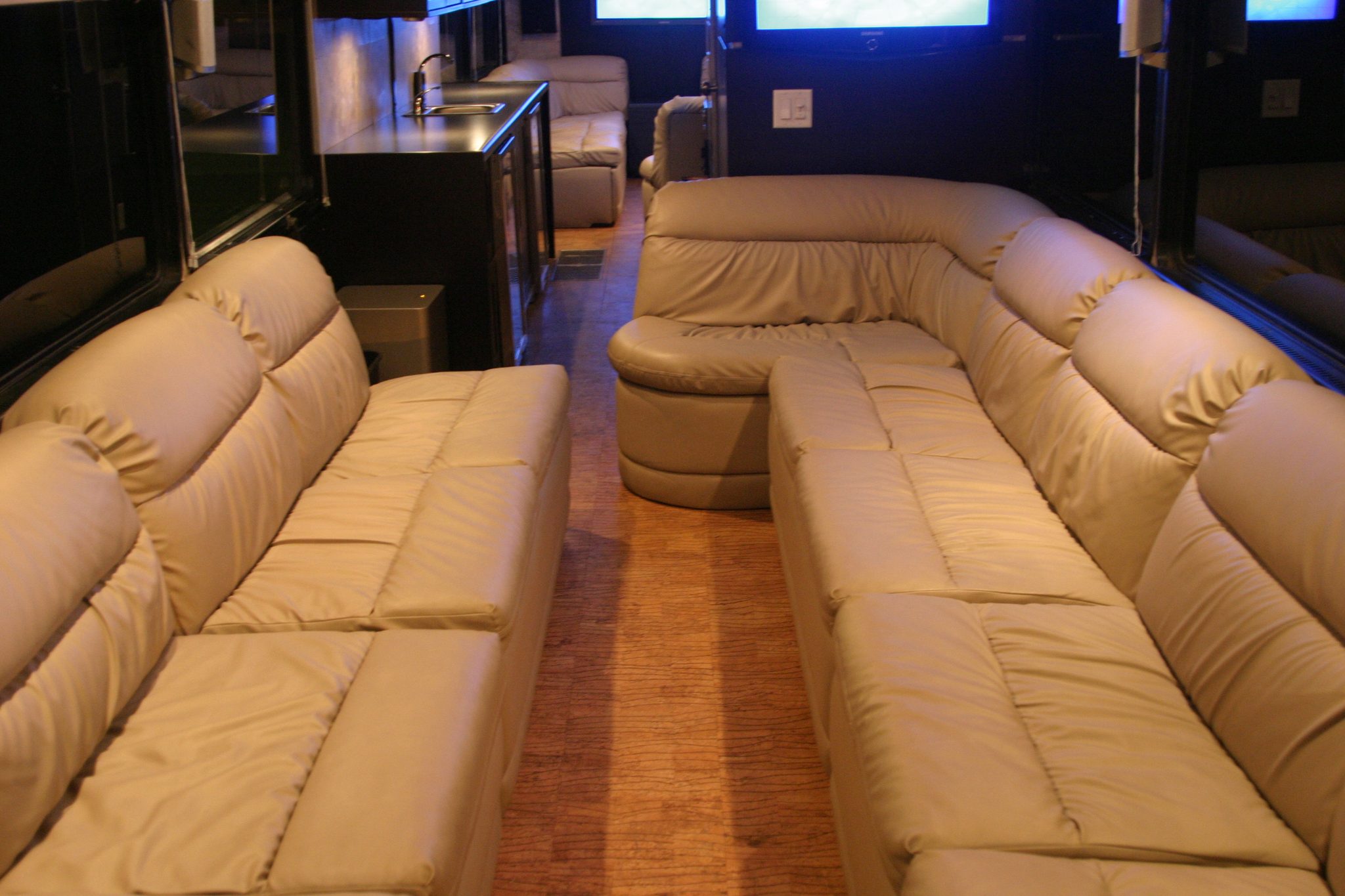
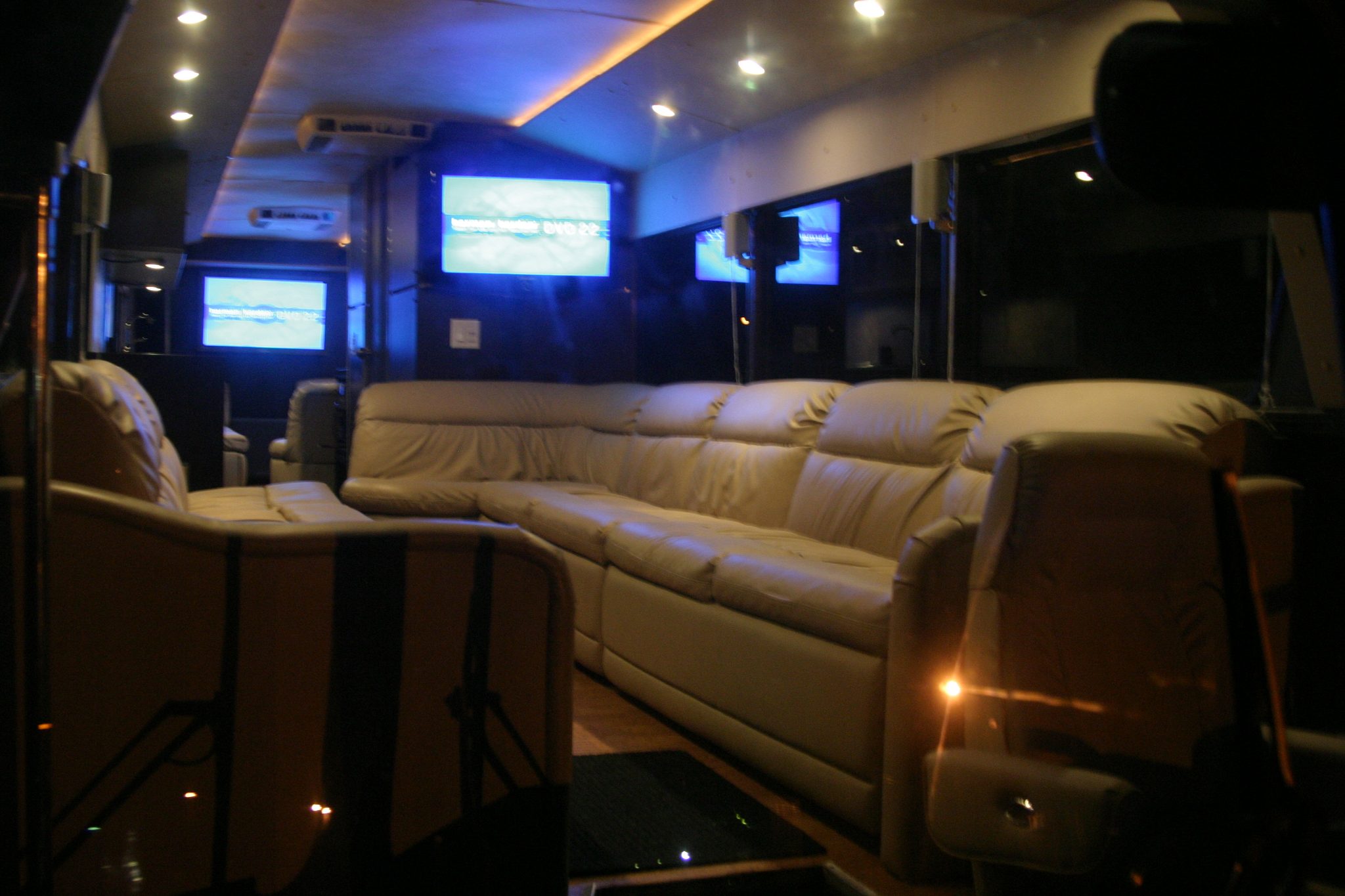
Cream leather, black cabinetry, blue light from the screens. Grouped by what you are looking at.

The Screens

Lounge with a large screen showing the THX logo
THX on the Big Screen
Flat panel mounted above a couch corner
Corner Panel
Lounge with the main screen playing a movie
Movie Night
Flat panel above the leather seating
Panel Over the Couch
Wide view of the lounge with a flat panel and the bar
Lounge and Bar
Looking down the aisle with blue accent lighting
Blue Light

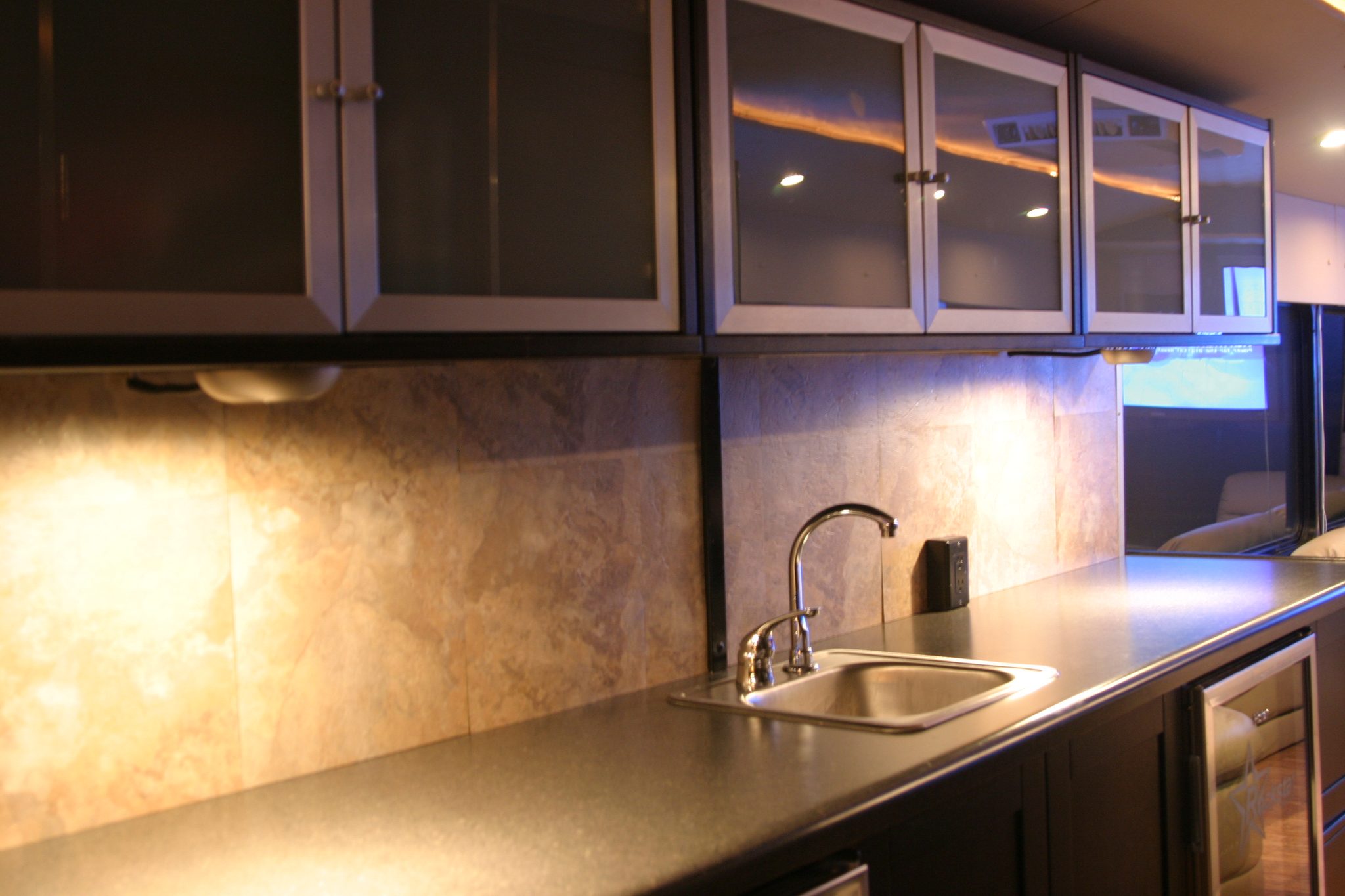
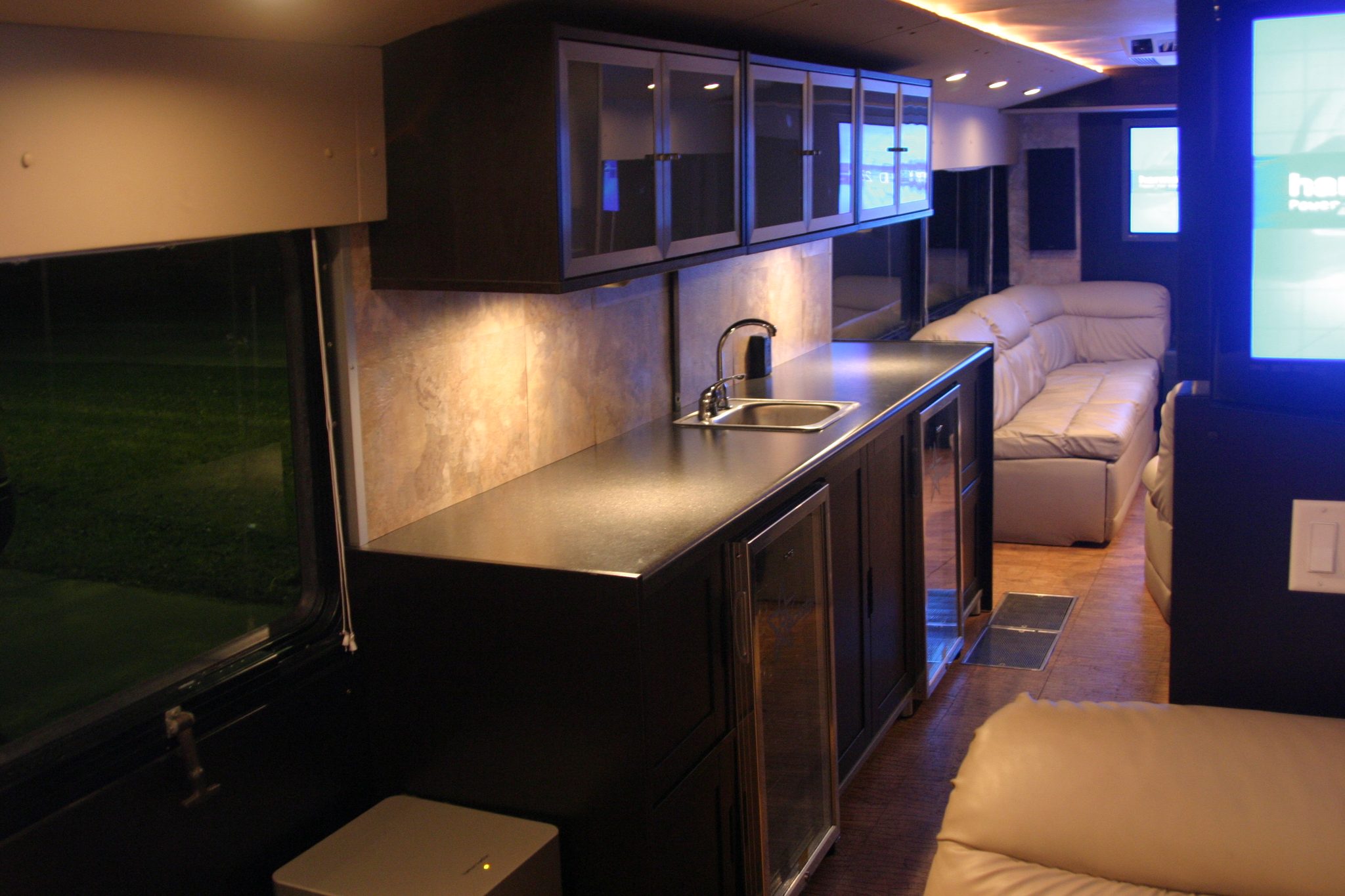
The Bar

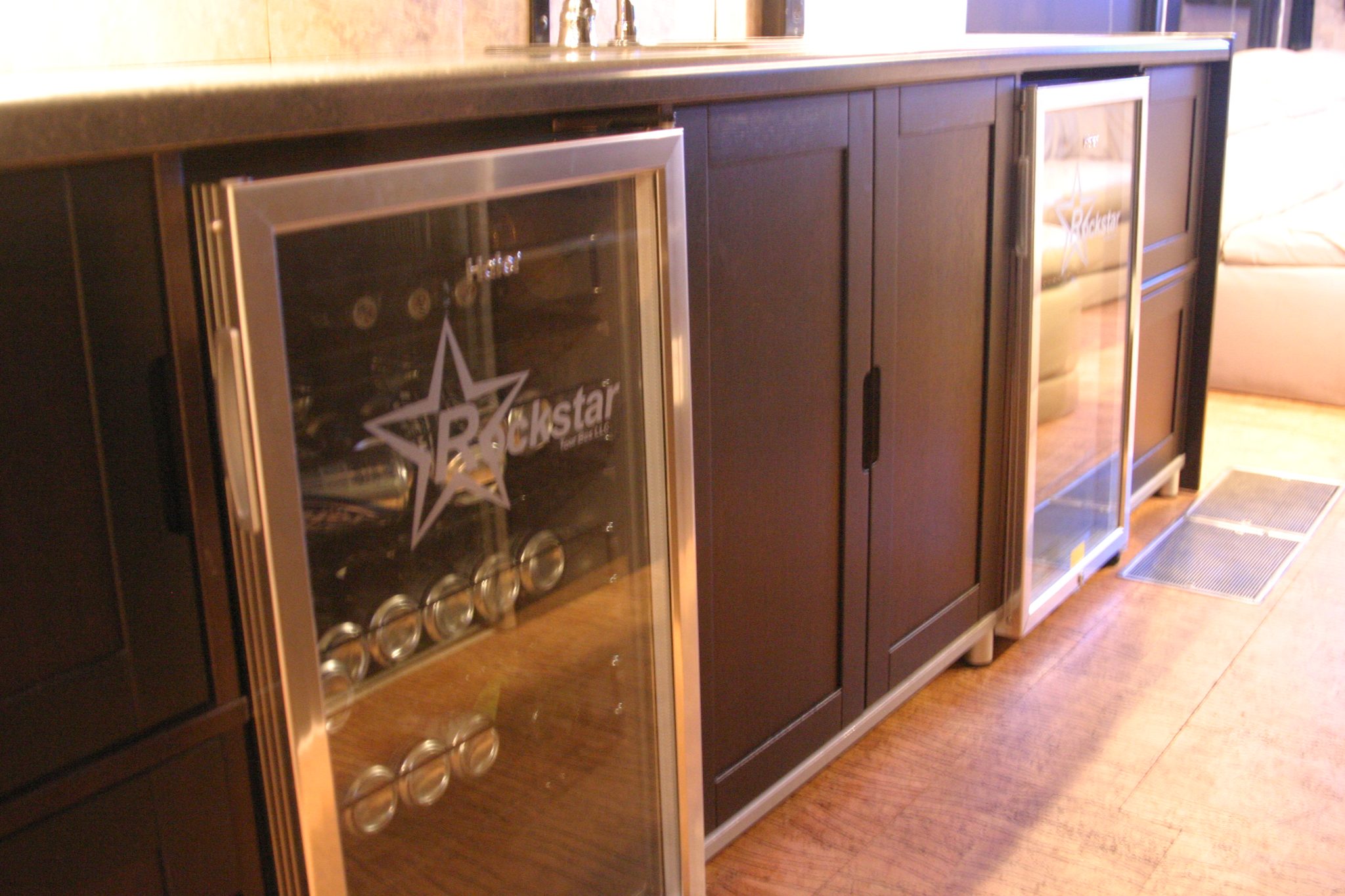
Glass-front refrigerators etched with the Rockstar logo
Dual Refrigerators
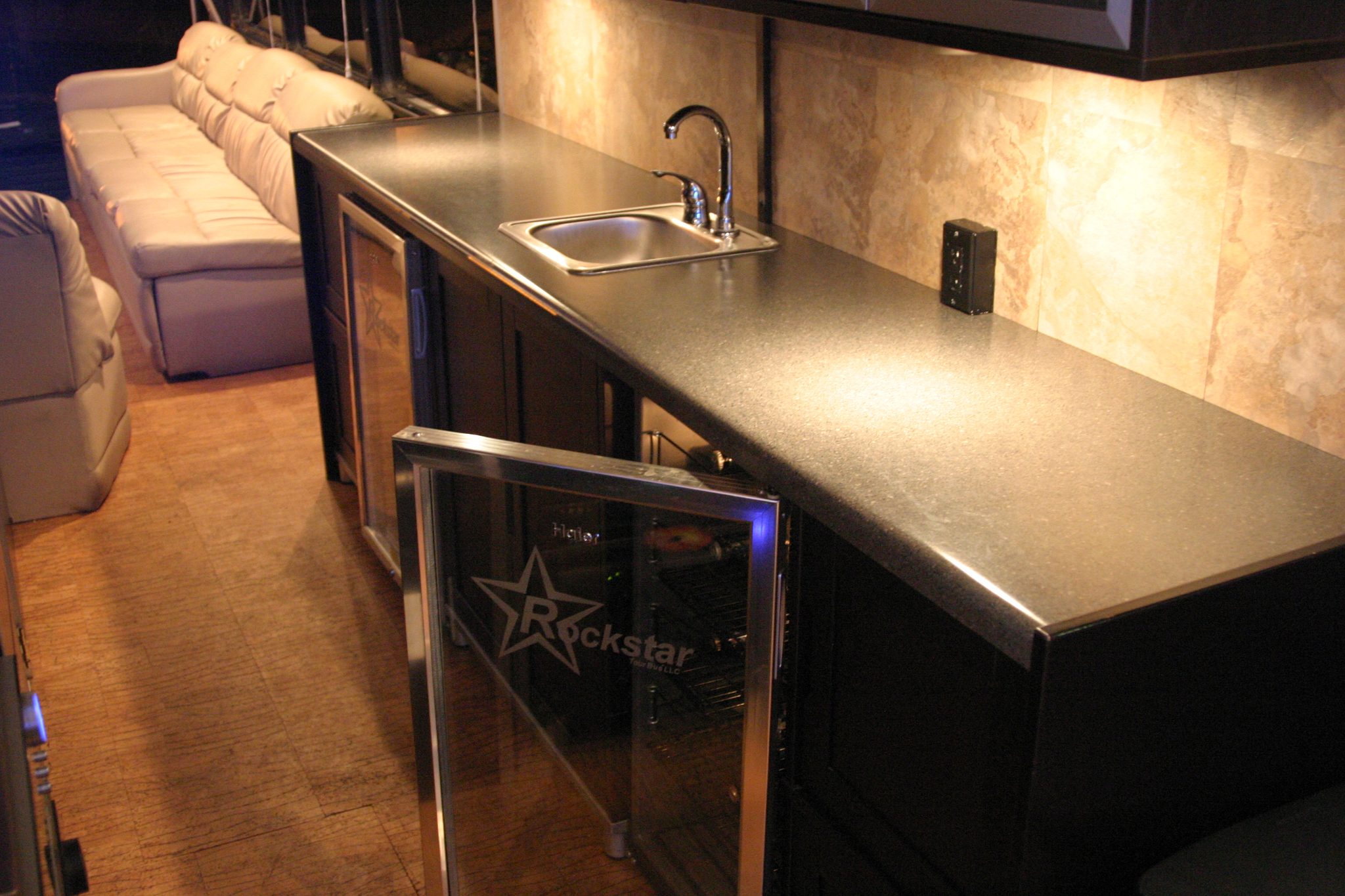
Bar counter with sink and the star logo
Wet Bar
Bar cabinets and sink under cabinet lighting
Cabinets
Bar and lounge seen from the aisle
From the Aisle

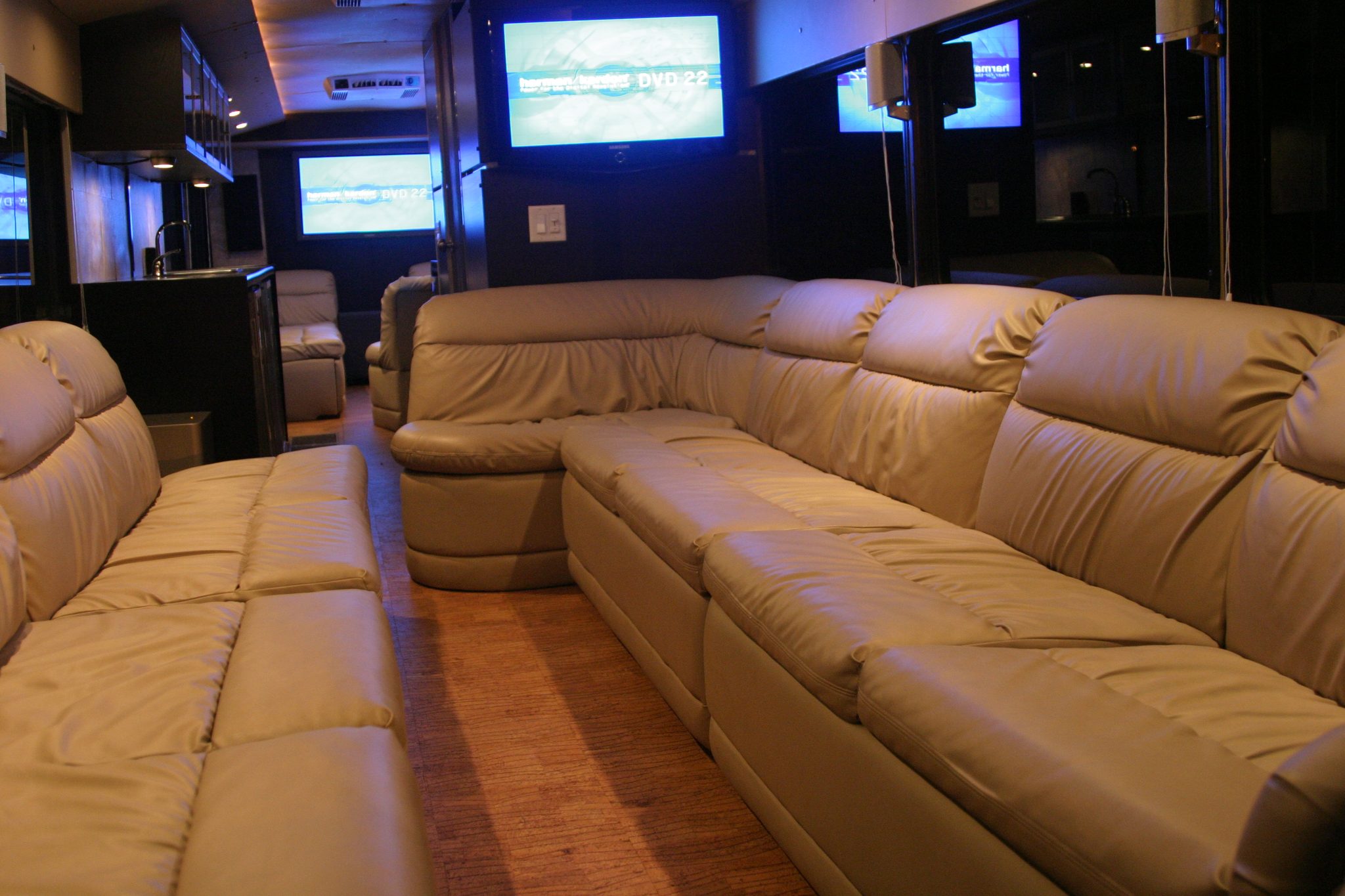
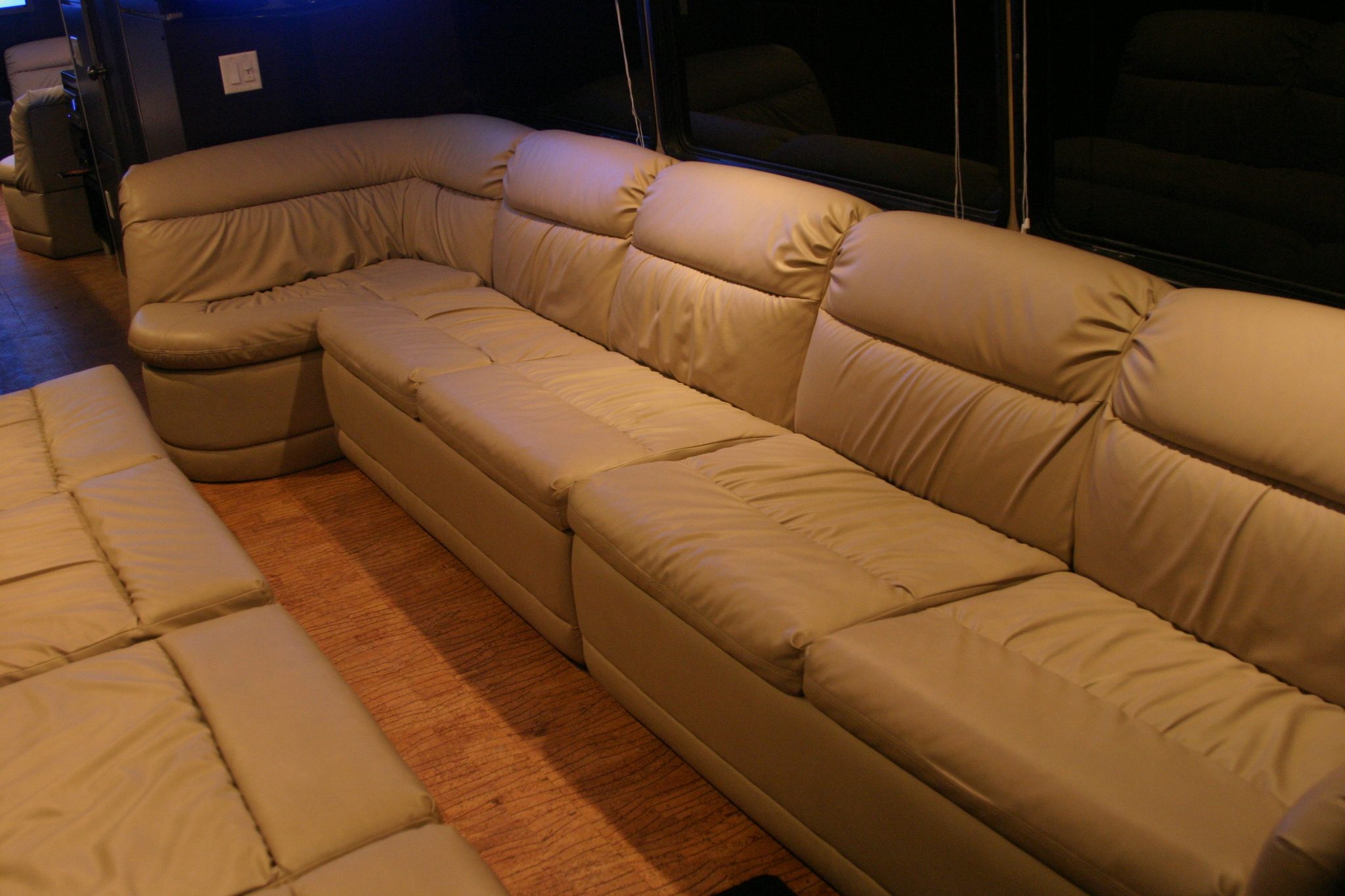
The Couches

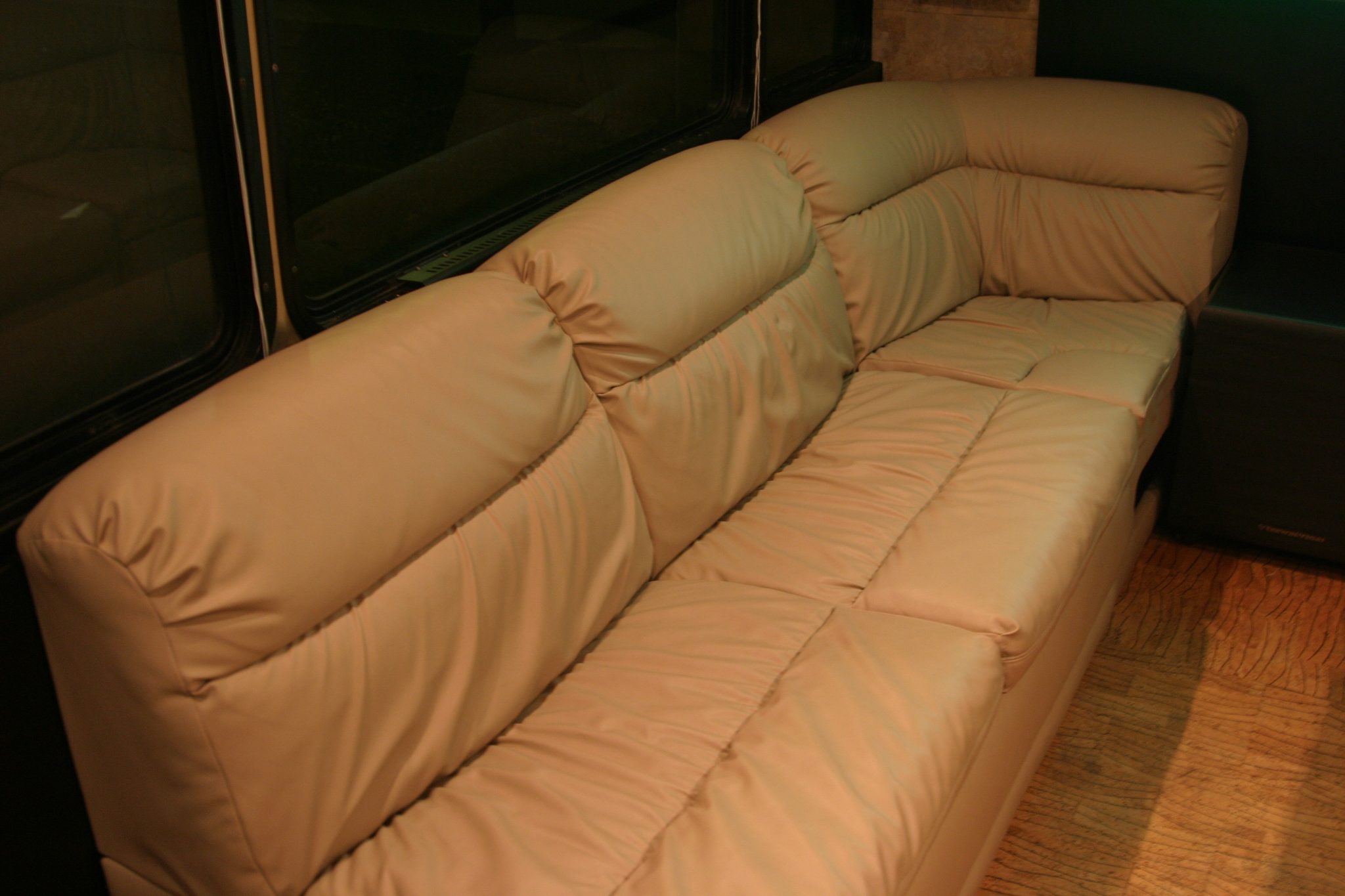
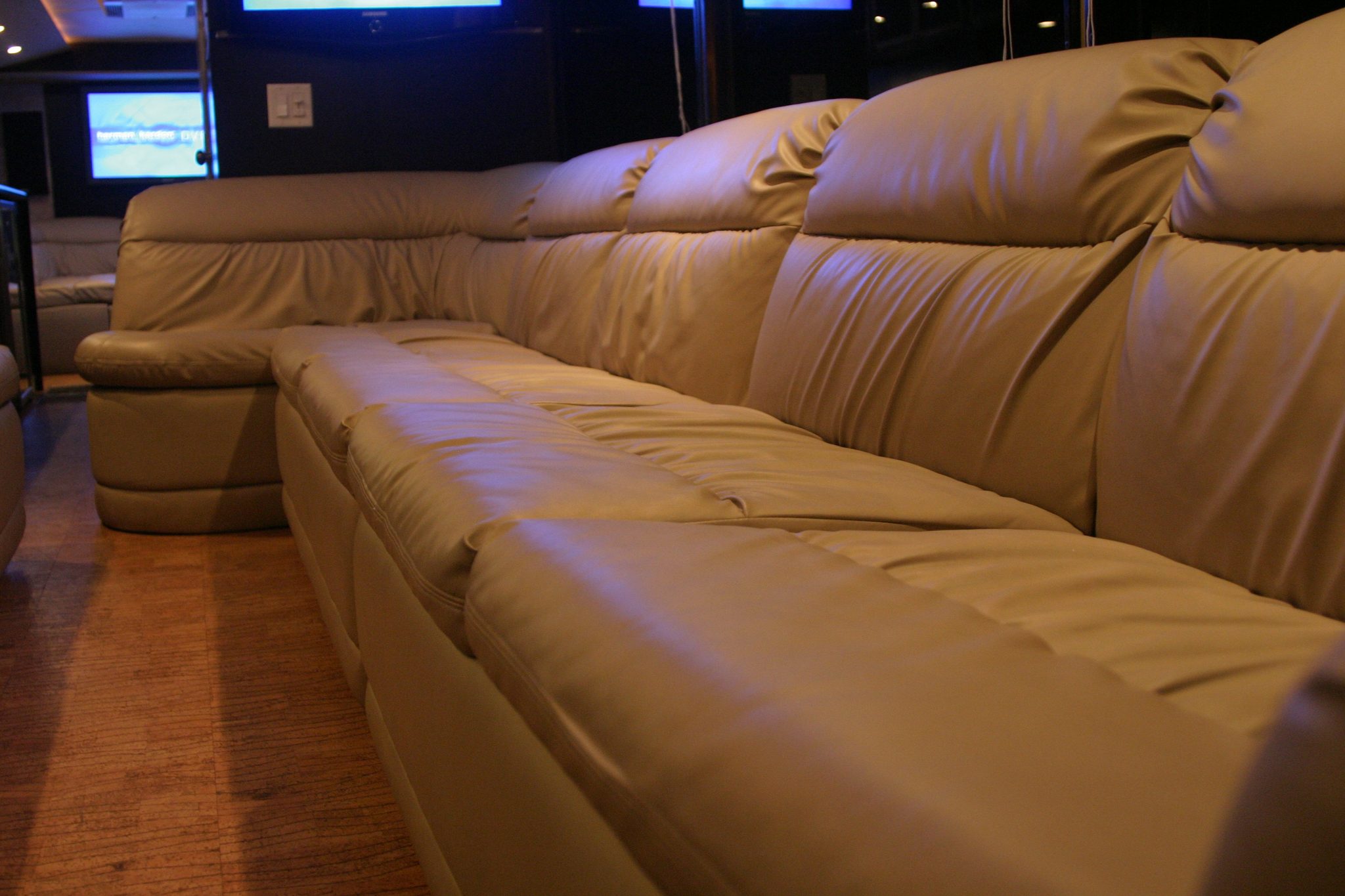
Long cream leather couch along the wall
Cream Leather
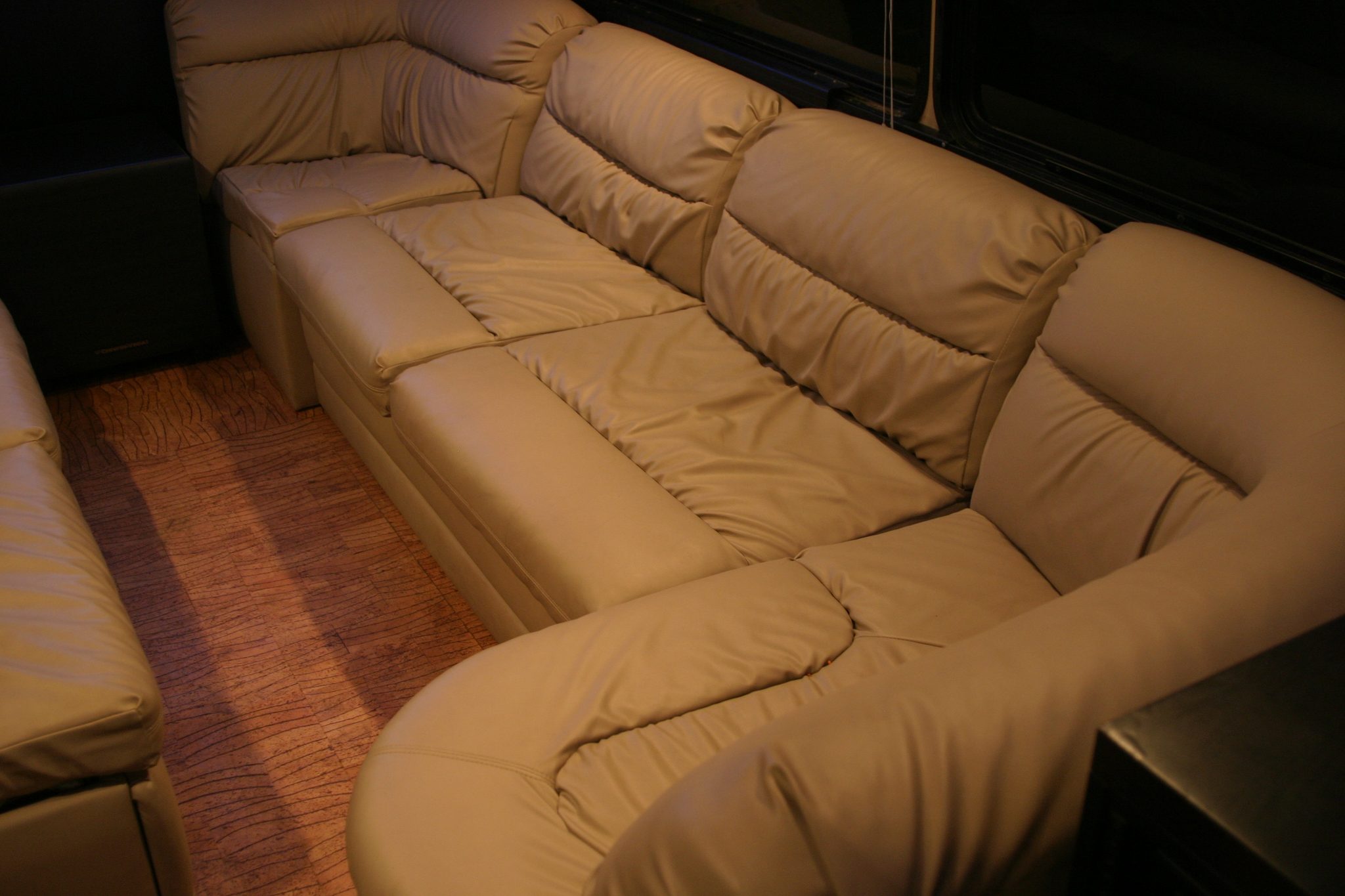
Wraparound couch seating
Wraparound
Looking down the aisle between the couches
Down the Aisle
Corner of the couch with wood floor
Corner
Couch cushions in warm light
Cushions
Couch seating with a screen at the far end
Toward the Screen
Couch seating from the opposite end
From the Other End
Seating and a screen in low light
Lights Low

The Restroom

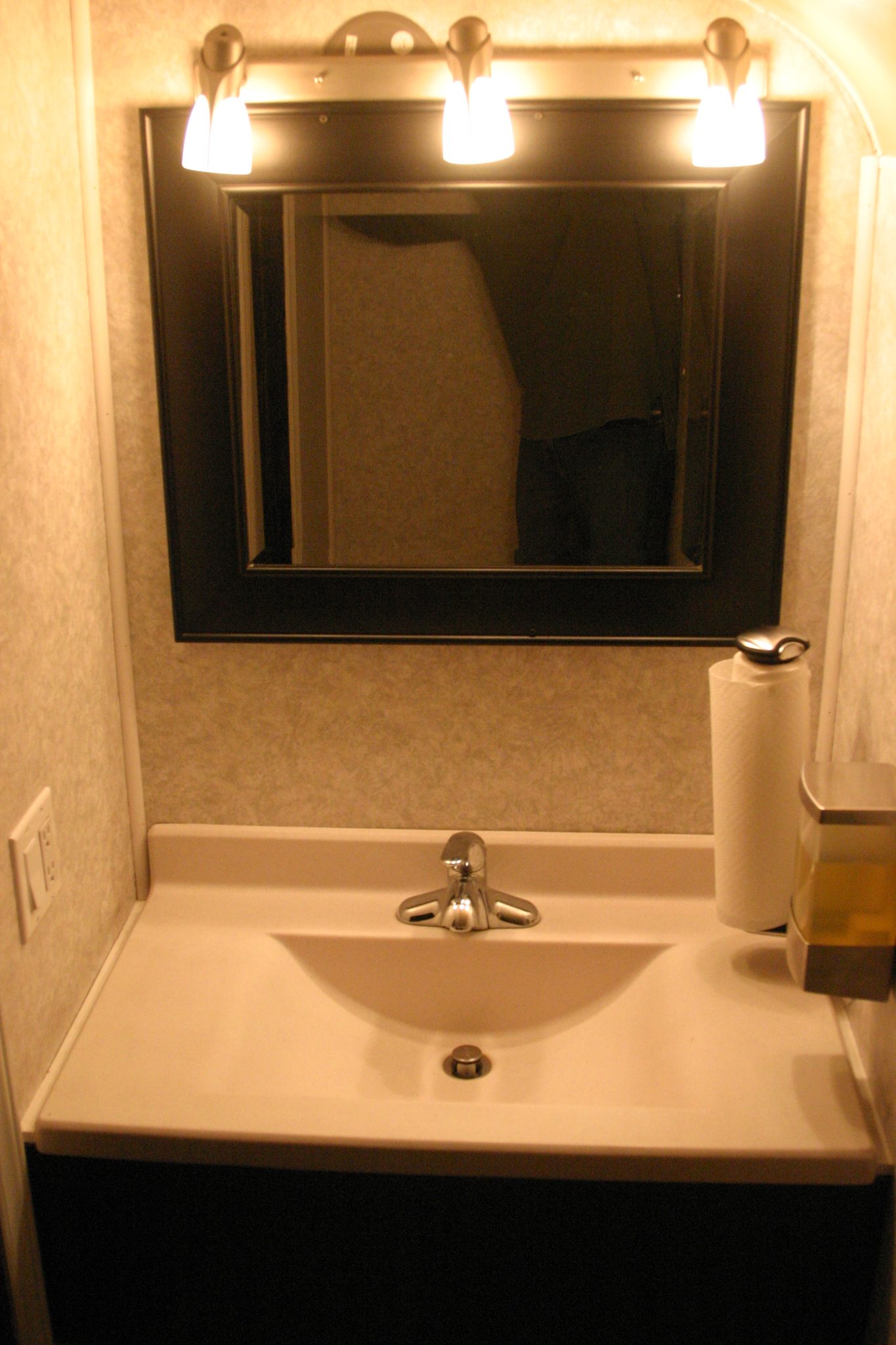
Restroom vanity with mirror and sink
Vanity
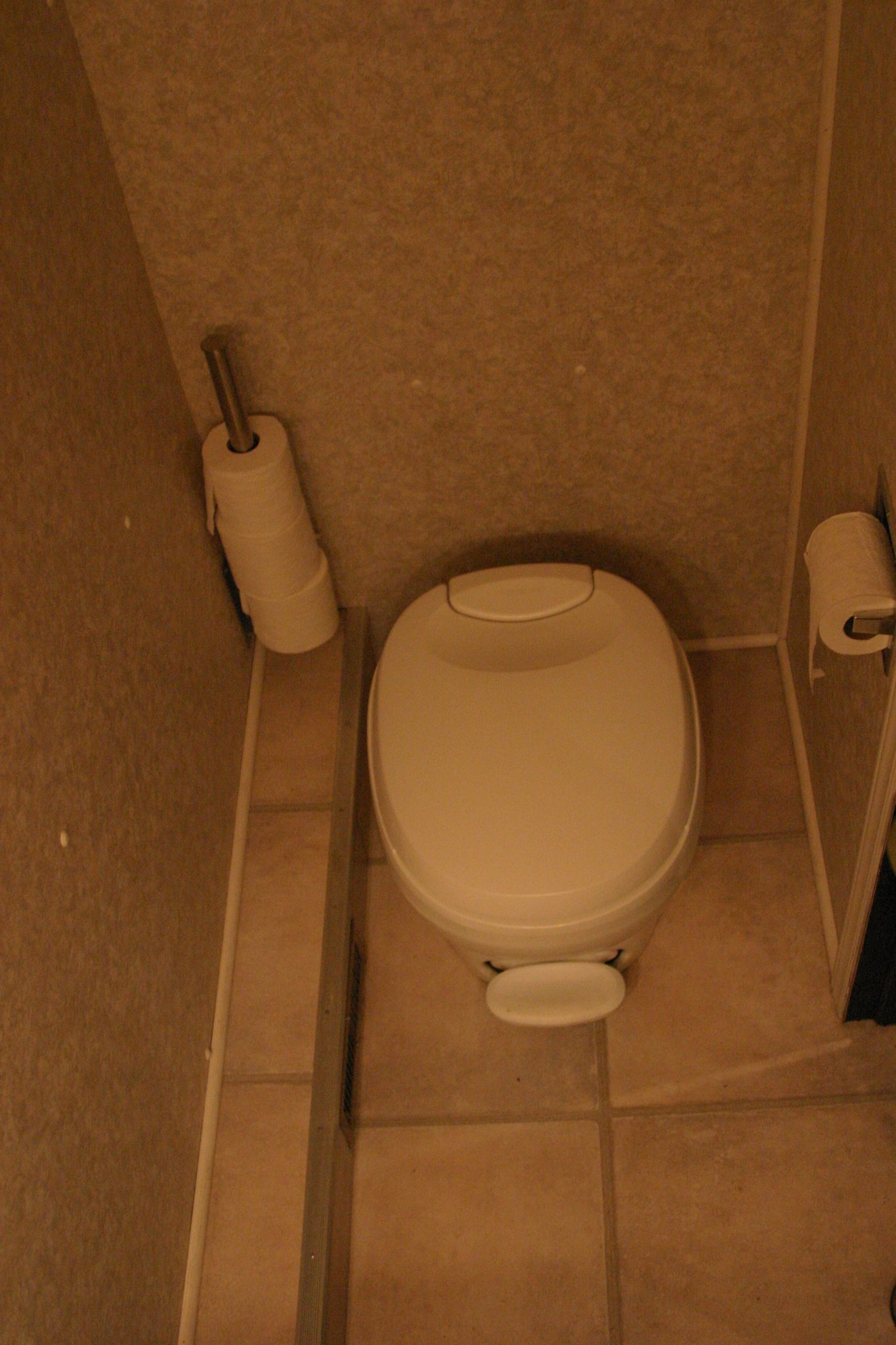
Restroom toilet
Yes, a Real One

The Coach Itself

Eagle Model 10

Rockstar is a 40 foot Eagle Model 10, built in Brownsville, Texas. Eagles are not built like a modern coach: no truck frame under a body, no air bags. A welded steel cage carries everything, the whole bus rides on rubber, and a two stroke Detroit Diesel screams behind you.

Where It Comes from

In 1954 Greyhound rolled out the two level Scenicruiser. Continental Trailways needed an answer, so in 1956 it had Kässbohrer in Ulm, Germany build the Golden Eagle, named for its gold anodized siding, with a rear observation lounge and an aircraft style galley. The plain fleet version with grey siding followed in 1958: the Silver Eagle, the standard Trailways coach for the next thirty years. The name and the eagle badge came from American Bus Lines, a Trailways predecessor. Production moved to Bus & Car in Brugge, Belgium in 1961, then to a new Eagle International plant in Brownsville, Texas late in 1974. About 8,000 Eagles were built in four countries over four decades.

The Model 10 arrived in 1980 as the first real redesign of the Brownsville era. A sloping one piece front cap replaced the Model 05's notched brow, the rear windows gave way to a smooth one piece end cap, the entry door and driver's window grew to the height of the windshield in 1981, and the dash was redone with aircraft style instruments. Behind the rear axle sat the new turbocharged Detroit Diesel 6V-92TA, the first Eagle you could order with an Allison automatic.

The plant nearly closed in 1979; Trailways sent Frank Hines down to shut it, and he saved it instead with a fifty coach order from Houston Metro that paid for the Model 10. Exactly 2,217 Model 10 coaches were built between February 1980 and the last delivery in November 1987, 300 to 400 a year at the peak and about 75 in 1986, plus 84 two axle Model 10S commuter versions from a second plant in Harlingen. Bare shells were sold for motorhome conversion, and 14 right hand drive Model 10s went to Greyhound Australia. The 102 inch wide Model 15 arrived in 1985, but the 96 inch Model 10 stayed in production because it fit tight East Coast routes like the Holland Tunnel. Greyhound bought Trailways and Eagle in 1987, the factory passed to Mexican owners in 1991 and built mostly motorhome shells, and a 2005 revival in Brownsville and then Tennessee ended without a sale.

Built
1980 to Nov 1987, Brownsville TX
Production
2,217 Coaches, Plus 84 Model 10S
Length
40 ft
Width
96 in
Height
About 11 ft
Weight
About 28,000 lb Empty
Seats as Delivered
42 to 53, Usually 46 Plus a Lavatory
Engine
Detroit Diesel 6V-92TA, 552 cu in Two Stroke V6, Turbo and Aftercooled (8V-71 Optional)
Power
Up to 335 hp, About 1,000 lb-ft
Transmission
Allison HT740 4 Speed Automatic
Rear Axle
Rockwell, 3.36
Axles
3: Steer, Tag, Drive (Tag Ahead of the Drive Axle)
Suspension
BF Goodrich Torsilastic Rubber Torsion, All Three Axles, Independent Front. No Air Bags
Frame
Welded Steel Tube Cage, Integral, No Separate Chassis
Skin
Fluted Anodized Aluminum, Riveted, Stainless Trim
Brakes / Steering
Air Drums, Ross Power Steering
Cruise
2,100 rpm, About 70 mph, About 7 mpg
Replaced by
Model 20 (96 in) and Model 15 (102 in)

How It Is Built

Kässbohrer invented self supporting bus construction in 1951 and named the company Setra after it, from the German selbsttragend. Every Eagle inherits that idea: a cage of welded 1.5 inch square steel tubing carries the load in the sidewalls, with a thin fluted aluminum skin riveted over it. Even the baggage doors help stiffen the body. Six workers could lift the upper frame of the original Setra by hand. The raised passenger deck over a full length luggage bay, standard on every American coach since, was an Eagle idea too.

A modern Prevost or MCI is still integral, but the structure is stainless steel, the skin is fiberglass composite, the glass is bonded, and it rides on air. The Eagle is steel, aluminum, rivets, and rubber.

Why It Rides Like This

Torsilastic is a BF Goodrich design from the 1940s: a rubber sleeve bonded between two steel tubes, twisting as a spring. No metal touches metal and no parts come loose. The rate stays constant as it settles, so the coach never turns harsh under load, and because the body is cradled in rubber, road noise stays out of the cabin. There are no air bags and no leveling valves; ride height is set with a threaded rod, and coaches fifty years old still run their original springs. Owners put it simply: nothing rides quite like an Eagle. It is the reason touring musicians could sleep in the bunks, and the reason Eagle owned the entertainer coach market.

The Screaming Jimmy

The 6V-92TA is a two stroke, so every cylinder fires on every revolution. At its 2,100 rpm cruise it sounds like an engine spinning twice as fast, with a gear driven Roots blower whining on top. It burns oil by design, about a quart every thousand miles, and the exhaust smells like it. Paired with the Allison HT740 it was the standard American coach driveline for almost twenty years. Good for 300,000 to 400,000 miles between overhauls, roughly 7 miles per gallon, and a Jacobs brake to hold it back on the downgrades.

How to Spot a Model 10

  • Sloped front cap over the windshield, not the Model 05's angular notch
  • Smooth rear cap with no rear windows
  • Round headlights. Rectangular ones mean a Model 15 or 20
  • Entry door and driver's window as tall as the windshield: 1981 or later
  • One big rectangular exhaust means the 6V-92TA; twin pipes mean the older 8V-71
  • 96 inches wide. The Model 15 went to 102
  • Tag axle ahead of the drive axle, the Eagle layout since 1968

The Original Rock Star Tour Bus

By 1978 the Eagle was the tour bus. Its rubber suspension let a band sleep in the bunks at 70 mph, and a cottage industry grew up around it in Nashville and Florida: Florida Coach was the first to buy new Eagle shells for conversion in 1978, Roadhouse Coach put ZZ Top in a Silver Eagle in 1977, and Joey and Trent Hemphill started Hemphill Brothers in 1980 with two 1965 Silver Eagles and a $50,000 loan cosigned by their father. Their layout, front lounge, galley, bunk room, rear lounge, is still what a star bus means. Eagle held that market until Prevost took it in the 1990s, and the Brownsville factory spent its last years building nothing but entertainer shells.

Who Rode Eagles

  • Willie Nelson. Four Florida Coach Eagles built 1982 and 1983: Honeysuckle Rose, Scout, Warrior, and Red-Headed Stranger. The original Honeysuckle Rose was totaled in Nova Scotia in 1990; five buses have carried the name since
  • Paul English, Willie's drummer: a 1983 Eagle with a 6V-92 called Me and Paul, fitted out like a 1920s saloon with stained glass and red velvet. It sold in 2015 for over $80,000
  • Loretta Lynn: a baby blue 1970s Eagle that had already belonged to Vassar Clements and Faron Young
  • Van Halen called Hemphill Brothers in 1982, one of the company's first rock clients
  • ZZ Top: Roadhouse Coach's first client, in a Silver Eagle, 1977
  • Neil Young: Zuma, a 45 foot Eagle with two 1949 Buick Roadmasters on the roof and a 1948 Buick grille up front
  • George Strait: a 1993 45 foot Eagle with a factory raised roof
  • George Jones named his bus Silver Eagle, then recorded a song called "Silver Eagle" with Merle Haggard in 1982
  • Jackson Browne recorded "Nothing But Time" on the 1977 Running on Empty album aboard a moving Continental Silver Eagle, and put the bus in the lyric
  • Paul McCartney and Wings, The Who, David Bowie, Charlie Daniels leased from Hemphill Coach in the 1970s, whose first bus was a 1972 Eagle
  • Lynyrd Skynyrd, Waylon Jennings, Don Henley rode Show Bus's Silver Eagle out of Nashville
  • Ozzy Osbourne's 1982 tour bus was an Eagle. It was parked in Leesburg, Florida when the plane carrying Randy Rhoads clipped it

On Screen

  • Eagle Model 10s appear in Superman III (1983), Pure Country (1992), Village of the Damned (1995), and Holes (2003)
  • Doris, the Stillwater tour bus in Almost Famous (the Tiny Dancer scene), is a 1962 Eagle, ex Trailways. Disney reused her in The Country Bears
  • One 1975 Silver Eagle has worked in Black Mass, Detroit, Labor Day, and Only Murders in the Building

Eagle Facts

  • The "mustache" on the front of the first Eagle carried a K for Kässbohrer until the bus got its name
  • At its peak Eagle held 98 percent of the entertainer coach market
  • Over 3,000 Eagles were built in Texas. Every one carries a VIN starting with 1EU
  • Four articulated Super Golden Eagles were built in 1958 with Rolls-Royce diesels; one survives restored in Massachusetts
  • Not every legend rode an Eagle: Johnny Cash's JC Unit One is an MCI, Dolly Parton's Gypsy Wagon is a Prevost, and Elvis's TCB bus is an MCI
  • A Golden Eagle and a Silver Eagle live at the Museum of Bus Transportation in Hershey, Pennsylvania
  • Eagle owners still gather every July at the Eagle Palooza rally in Gallatin, Tennessee, about 25 coaches from the 60s to the 90s
  • New Torsilastic springs are still made in San Antonio, $2,000 to $3,000 a piece
  • A running Model 10 shell sells for under $10,000 today; a professionally restored one, $60,000 to $125,000
  • A 1984 Model 10 entertainer with nine bunks, four sofas, and 440,000 miles sold for $59,000

Sources: Wikipedia, Bus Conversion Magazine, National Bus Trader, CPTDB, Curbside Classic, Bus Nut, IMCDb, Bus & Motorcoach News, Entertainer Motorcoach Hall of Fame, Rolling Stone, Texas Monthly, Saving Country Music, Sulastic, Detroit Diesel spec sheets, owner forums.

Booking

The Fine Print

Welcome

Whether it's a business meeting or a bachelorette party, your journey will be so comfortable and fun, you will be sorry when you arrive at your destination.

  • Weddings and Anniversaries
  • Proms and Homecomings
  • Concerts and Shows
  • Football Games and Other Sporting Events
  • Bachelor and Bachelorette Parties
  • Night Out on the Town
  • Corporate Events
  • Birthday Parties

Rates

Weekday
$120 per hour
Weekend (Fri, Sat, Sun)
$145 per hour

The rates are calculated by the hour, beginning when the bus leaves the terminal in Fort Lauderdale. There is a 4 hour minimum rental everyday except Saturday, which is a 6 hour minimum rental, if the rental is not completed by 6pm. The rate includes driver and fuel. Additional charges such as parking and tolls are not included in these rental rates. There is also a required 10% minimum gratuity for the driver.

Don't be fooled by the party bus or limo bus pricing, this includes true Rockstar service.

Before You Go

  • The bus has on-board refrigerators that will keep your drinks cold, but only if they start cold. So be sure to buy cold drinks or ice them down before you plan to depart.
  • Coolers will be stored in the luggage compartments below, as they make it difficult to move throughout the bus.
  • Let us know if you would like a gas grill or outdoor sound system.
  • The in-motion satellite can sometimes be affected by weather or obstructions, so please plan to bring some DVDs or CDs as a backup.
  • Keep in mind the size of the bus when planning a pick-up and drop off point.